If we as humans reject the horrific unethical beliefs of many Muslims, Christians, and Hindus such as their claims that a god plans all evils, natural disasters, plagues, famines, murders, rapes, and human slaughters...
And we already have rejected delusions and fanciful mythological stories of religions in general as various thoughtful theists have done since Plato...
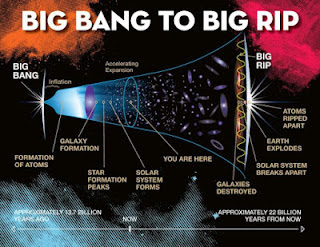
HOW
do we limited human primates go about thinking about “Ultimate Reality”
(usually and traditionally termed “God”)?
Ah, the God question.
WHY?
Nothing like trying to solve the nature of existence, multi-billions of years of cosmic history, why the Big Bang happened, and why is it possible (to paraphrase Einstein) that mere primates came to self-aware consciousness
and the ability for creativity, reason,
science, technology, aesthetics, music,
moral realism including justics, human rights, and compassion.
The how is often answered by cosmologists speculating about multi-verses and quantum events. Fascinating stuff. As for humanity’s sometime actions of altruism, evolutionary biologist Richard Dawkins speculates that ethical ideals might have come about by a “misfiring” of evolution.
However open agnostics such as the astronomer Chris Impey of the University of Arizona-Tucson raise very good questions about the unusual anomaly of Homo
sapiens in the midst of what appears to be an unconscious, thoughtless, amoral cosmos.
Astronomer Impey: “If the universe contained nothing more than forces operating on inanimate matter, it would not
be very interesting."
"The presence of sentient life-forms like us
(and perhaps unlike us) is the zest, or
the special ingredient, that gives cosmic
history dramatic tension."
"We’re made
of tiny subatomic particles and are part
of a vast space-time arena, yet
we hold both extremes
in our heads.”
How It Began By Chris Impey
Yes, the amazing ability of conscious primates to hold the concept of the macrocosm to the microcosm within each of our heads, to create new things which never existed, to have a sense of ought which often thwarts what is biologically advantageous...
So, if we humans want to move beyond our personal feelings and inner intuition in regard to Ultimate Reality, we need to look to brilliant scientists and philosophical thinkers.
While atheist thinkers have posited that everything is due to cosmic
Chance (Jacques Monad, Stephen Jay Gould)
or
Necessity/Determinism (Sam Harris, Jerry Coyne),
in striking contrast
astrophysicists such as George Ellis,
thinkers such as mathematician/philosopher
Alfred Lord Whitehead
and philosopher Charles Hartshorne
think that Meaning and Creativity and the Good
are at the center
and beginning of
everything.
Consciousness, creativity, reason, morality, aesthetics are somehow inherent
in the essential essence of the cosmos,
not meaningless anomalies like atheists claim.
Since Charles Hartshorne comes from a Quaker background, attended Haverford Quaker College
and is the most recent brilliant theistic thinker,
let’s first take a look at him
and his concepts and philosophy
which he terms,
panentheism.
Earliest Spiral Galaxy
For Hartshorne, the future is OPEN. Creativity, possibility are there. God and all conscious life have real alternative choices to create.
"A hallmark of Hartshorne’s neoclassical theism is that the universe is a joint creative product of (a) the lesser creators that are the creatures, localized in space and time, and (b) the eminent creator which is God whose influence extends to every creature that ever has or that ever will exist."
--Donald Wayne Viney, Pittsburg State University
http://www.iep.utm.edu/hart-d-t/
"Charles Hartshorne, (born June 5, 1897, Kittanning, Pennsylvania, U.S.—died October 10, 2000, Austin, Texas), American philosopher, theologian, and educator known as the most influential proponent of a “process philosophy,” which considers God a participant in cosmic evolution."
"The descendant of Quakers and son of an Episcopalian minister, Hartshorne attended Haverford College before serving as a medical orderly in World War I. He completed his undergraduate education at Harvard University...earned a doctorate in philosophy in 1923. Hartshorne studied in Germany (1923–25), where he met Martin Heidegger and Edmund Husserl."
"He returned to lecture at Harvard (1925–28), after which he taught philosophy at the University of Chicago (1928–55) and at Emory University in Atlanta,
Georgia (1955–62). He then taught...philosophy at the University of Texas--Austin...He also served as president of the American Philosophical Association and the Metaphysical Society of America."
http://www.britannica.com/biography/Charles-Hartshorne
In the LIGHT,
Dan Wilcox
Musings on Ultimate Reality, ethics, religion, social history, literature, media, and art
Showing posts with label astrophysicist. Show all posts
Wednesday, May 18, 2022
Saturday, September 20, 2014
The Wizard of Awes: Part #2
My last post’s title was “Ah, Yosemite Falling Again.”
Ah—as in pleasant surprise, relief, regret, amazement…
But, of course, the main side-traveler is the pun, ah and awe, and an allusion to The Wizard of Oz, the famous children’s book and award-winning movie.
And the matter which so many thinkers have brought up--astrophysicist Adam Frank most recently this week on a NPR blog--where does the human emotion of awe come from?
Is awe only a movement of brain chemistry?
Is awe only a religious illusion?
Frank’s answer on awe is “about attention not attribution.” Don’t worry about attributing the experience, but focus on the validity of the moment.
But I’m an onion peeler. How can we find value in “awe” if it’s only an illusion of brain chemistry?
Is awe no more than an evolutionary adaption, a “misfiring” of natural selection, no more than neurons, etc?
Keep in mind what I am worry-warting here is neuroscientist Sam Harris’s infamous statement that even our sense of “I” is an illusion.
According to some scientists such as Sam Harris, we conscious primates and everything in existence from the Big Bang to me typing this sentence—all of it is determined. If so, if the “I” who is clicking my keyboard doesn't exist, but is only an illusion, then, of course, a transcendent emotional experience of mine when standing below Yosemite Falls is even of less significance, of no significance.
In that case, like in the children’s book and movie, there is no wizard of awes.
The transcendent feeling we humans sometimes experience when encountering the gigantic depths of the Grand Canyon, the intense and vast expanse of the Milky Way Galaxy while on a camping trip far from light-dense cities, or standing entranced on the walking bridge drenched in the spray from Yosemite Falls which plunges down into the gorge of Yosemite Valley thousands of feet below...
It’s all just atoms functioning.
No god wizard of religion, but no ultimate reality of philosophers and some scientists either.
I’m somewhat sympathetic to the skeptical view of religion. At present, after battling against some of the horrific delusions of various religions for 52 years, I've become skeptical of the usual supernatural wizards who are trotted out as the source of our awe when we encounter scenes that take our breath away.
But I find most atheists, not only sharp at showing the false pretentions of religion, but too often dissing the wonder of awe as well, too often claiming to know far more about the cosmos and absolute reality than even the most erudite cosmologist, and so often insistent it's all meaningless and purposeless.
No doubt this is why Einstein emphasized that he wasn't an atheist; he said wonder was the real basis for all science: "The most beautiful experience we can have is the mysterious. It is the fundamental emotion that stands at the cradle of true art and true science. Whoever does not know it and can no longer wonder, no longer marvel, is as good as dead, and his eyes are dimmed..."
"A knowledge of the existence of something we cannot penetrate, our perceptions of the profoundest reason and the most radiant beauty, which only in their most primitive forms are accessible to our minds: it is this knowledge and this emotion that constitute true religiosity...I am satisfied with the mystery of life's eternity and with a knowledge, a sense, of the marvelous structure of existence -- as well as the humble attempt to understand even a tiny portion of the Reason that manifests itself in nature."
From The World As I See It by Albert Einstein
My own view is that the sense of awe we experience when encountering incredible natural vistas is inherent in us the same way that reason, creativity, free will, human rights, and ethical standards such as honesty and compassion are.
In this dramatic vista that has overwhelmed us, we finite primates encounter a touch of the beautiful, the wondrous, the infinite.
In the LIGHT,
Daniel Wilcox
Labels:
astrophysicist,
awe,
Einstein,
Half Dome,
illusion,
infinity,
Milky Way Galaxy,
nature,
religion,
Sam Harris,
Science,
vista,
Wizard of Oz,
Wonder,
Yosemite
Thursday, September 11, 2014
Are We Stardust?
Yes and no.
Often when various leaders say this, that we humans are “stardust,” it is meant in a sense of “how amazing!” A highly romanticized phrase giving validation to us as Homo sapiens.
Even the very informative science book on cosmology, The View from the Center of the Universe, speaks of how we humans are stardust. The physicist Joel R. Primack and co-writer Nancy Ellen Abrams explain:
“Stardust is thus part of our genealogy. Our bodies literally hold the entire history of the universe, witnessed and enacted by our atoms.”
Sounds impressive, especially since the claim is coming from a physicist, and the co-writers are professors at the University of California, Santa Cruz.
But wait, notice the personification in the sentence, “witnessed and enacted by our atoms.”
Think about it, atoms can’t “witness” anything. Only conscious, aware finite life can witness.
It’s true, if not for the cosmic creation and explosions of stars after the Big Bang, we wouldn't be here. The elements from which life—including us-- came were formed billions of years ago.
“The nitrogen in our DNA…the iron in our blood, the calcium in our teeth, the carbon in our genes were produced billions of years ago in the interior of a red giant star. We are made of star-stuff.
Carl Sagan, “The Cosmic Connection” and Cosmos
And…
“the elements themselves (carbon, nitrogen, oxygen, etc.) were synthesized, cooked up as it were, in the nuclear furnaces that are the deep interior of stars. These elements are then released at the end of a star's lifetime when it explodes, and subsequently incorporated into a new generation of stars -- and into the planets that form around the stars, and the life forms that originate on the planets.”
Michael Loewenstein and Amy Fredericks for "Ask an Astrophysicist"
Even classic rock singers wrote and sang of this: “We are stardust, we are golden, we are billion year old carbon…” written and sung by Joni Mitchell, “Woodstock;” also crooned by Crosby, Stills, Nash & Young.
But we aren't ‘stardust’ in the sense of consciousness, self-aware, reasoning, computing, creating, ethically choosing primates.
So saying we are stardust is like saying we are composed of atoms.
In a basic microscopic sense, yes.
It’s like saying the sentences of this article are squiggles of ink on a page, pixels on a computer screen…well, yes…but that’s a superficial observation, a basic surface statement of the means whereby we consciously communicate complex ideas, scientific observations, abstract reasonings, creative writing through a series of lines and dots.
Stardust made life possible on earth but that doesn't define what conscious life is. Except maybe for those who think our sense of “I,” our consciousness, is an illusionary quirk like the biologist Francis Crick states and the neuroscientist Sam Harris and other materialists claim.
If in contrast, we choose to think human beings are an aware, reasoning, mathematically computing, and an ethical-choosing species that has evolved into the image of Ultimate Reality, what then?
Do we think we know how consciousness exists within human beings?
Do we understand the nature of reality which "existed" before the "Big Bang," before time and space came into being?
I've no idea. I'm not a professional cosmologist. And, besides, the older I get the less I think I know;-)
But consciousness does seem to be inherent in existence, at least on this planet, not a cosmically accidental quirk. Not an absurdity in a meaningless, purposeless universe.
Probably, where ever life reaches a certain plateau of complexity, consciousness appears.
And that is the true wonder—our awareness and our ability to think, reason, question, mathematically compute, and create!
Not the interesting but basic fact that our unconscious bodies have chemical elements formed from exploding stars billions of years ago.
We are star-focused lovers of the universe...
Asking "How?" and "By what means?" and "Why?"
In the Light,
Daniel Wilcox
Subscribe to:
Posts (Atom)


