Showing posts with label Spirit. Show all posts

Friday, December 14, 2018

Part #3: Wrestling....In the Beginning


(Hebrew name for first book of Jewish Bible) In the Beginning

1:1 --In beginning, Elohim created/creating, the heavens and the earth

A number of questions can be asked about this short sentence, and the next several. There are disagreements among Hebrew scholars, too, on a number of issues.

#1 Was this the beginning of the whole cosmos or, specifically, the beginning only of the earth and sky?

#2 Why is God called Elohim (which means God,‘in a generic sense’ in Hebrew because the word is also used for other gods than that of the Hebrews, and even refers to messengers and rulers, too)
rather than YHWH as in In the Beginning , chapter 2?

#3 Why was the earth “unformed and void” in the beginning?
Why would God create it in what seems to be a negative state of being?
And were the heavens also "unformed and void"?

#4 Why was there “darkness on the face of the deep”?

#5 Why did the spirit of God hover “over the face of the waters”, the “face of the deep”?

#6 What was the light that God said, “Let there be…” since the earth’s sun wasn't created until the 4th day?

#7 Why did God see the light, “that it was good”?

#8 What does it mean to say that “God divided the light from the darkness”?

#9 Is the “darkness” the same as “unformed and void”? Did God create the “darkness” or oppose it by creating light?

#10 Why did God call the light Day, and the darkness Night since there wouldn’t be turnings of the earth to meet the sun until the 4th day?

#11 Likewise, what does it mean when it says, “there was evening and there was morning, one day”?

#12 Why do modern translators use words such as Genesis instead of translating the Hebrew word-for-word?

I actually prefer the Hebrew literal translations of the first 5 books instead of the traditional English names:

In the Beginning
-
The Names
-
And He Called
-
In the Desert
-
Things or Words


TO BE CONTINUED--


In the Light,

Daniel Wilcox

Sunday, September 4, 2016

Quaker Humor #11: A New Atheist and an Ol' Quaker


A New Atheist blogger figured he had the ol’ Quaker by the goat-ee, hook, line, and sinker—
“Listen, you stupid theists are so superstitious, believing in ghosts, unicorns, the Easter bunny, and God.”


The Quaker put down his rod and reel, patted his black lab dog scrunched up against his boots, glanced down in the swirling ocean water under the pier, and then said, grinning,
“You mean like, Casper, where ‘ghost’ thou?”

“Who’s Casper?”

“Showing your age, er..guess I should say my age. Never mind, I was kidding.
I grew up in plenty of corn, back in the Midwest; Nebraska Cornhuskers! And lots of rabbits.
But we didn’t believe in unicorns, ghosts, and so on.
We didn't sow that sort of seed."

The ol' Quaker now looked intently with intensity into the Atheist's gaze.
"We seek the Seed of God, the Light that lighteth every human being. Nothing about superstition or tooth fairies.
Besides, I studied anthropology for two years at university and am an avid reader of paleontology.”

“Seed?! What are you talking about? Com’on, we know you theists believe there is a powerful invisible old man up in the sky who burns people.”

"You mean, like the election slogan about Sanders, 'Feel the Bern--'"

"Get serious! Bernie Sanders is a fine political candidate, and that was a terrible word play.

“I agree. I did vote for Sanders though; he has a very ethical platform. I'm surprised you are for him since Bernie very clearly stated he isn't an Atheist."


"You're avoiding my point."

The old Friendly fisherman got serious again."But as for the G-O-D word, yes, I think ultimate reality
is beyond what we finite humans can perceive and test.
Existence is more complicated than only matter and energy."


"Nothing exists but matter and energy!" The Atheist fumed; these theists were so irritating.

The old Quaker rubbed his dog's ears and then looked back up. "'Thee ist' too certain it seems about reality, about what you don't believe. How can you be so certain of the nature of reality?
Besides, we Friends don’t think there is any invisible man--or woman--up in the sky. Nothing like that."

There was a splash below; maybe a large cod, not God.

The Friend glanced back down into the ocean, then back to the man next to him. "Dear Atheist, there's a lot under the surface of things.
"We think that the Light, reason, math, ethics, human rights,
and aesthetics are all real and true, are inherent in reality.

"You sound like you believe ethics are objective and transcendent?"

"Yes, that's right--human rights, I might add."

The Atheist turned, very frustrated, and walked away, back down the pier.

The ol' Quaker picked up his fishing pole and grinned, and told his black lab, "Mostly what he needs is a little light-heartedness."

His dog wagged his tail.

Later when the fisherman got home with some fish 'cod,' he told his wife about the conversation.

She said, "Please stop talking nonstop;
come over and hold that other end of this fabric I'm sewing on."

"Oh, there's 'so,' again. He chuckled.

"What did you say, Darlin'?"

"Cut up and quilt."

Quaker Quilts: Mary Jane Clevenger
Descendant Barbara Harner Suhay with Mary Jane's quilt.
Photograph by Mary Holton Robare.


--


A bright lad came home from school and asked his dad, "What's the difference between our cat and a comma?"

His father grinned and said, "I don't know."

"The first has claws at the end of its paws, the latter has a pause at the end of its clause."


--


The Israeli student asked the girl from Ramallah Friends School,
"How often does your chemistry teacher tell science jokes?"

"Oh, periodically."
--


In the Light,

Daniel Wilcox

Tuesday, June 21, 2016

Yes and No--Review of Meeting: A Religious Autobiography by Chuck Fager

from Meetings: A Religious Autobiography by Chuck Fager:

“I’ve been trying to lose my religion for years now, but it refuses to go away. Just when I think I’ve shaken it – put it firmly behind me, a piece of my obscurantist past no longer suited to the faithless life I now lead – it turns up again, dogging me...”
Daphne Merkin

Chuck Fager:
"Daphne Merkin wrote that in the New Yorker, and it made me smile with recognition. As I undertake to unpack in these pages, losing “my” religion was also a major goal of my early adulthood.

But for me there turned out to be a difference between religion” and “Religion”: shaking off the church of my youth was possible; but then “Religion” proved not so easy to discard. Everywhere I turned, it kept coming at me."

"Partly this was no more than inclination and predilection: even shorn of belief, feeling the prickles of a theological buzz-cut as when rubbing my scalp after visiting the barbershop, the stubble of religion was still there, and was soon growing again, combed differently perhaps, but not to be held back. I was still interested in the subject."

"I only know to approach the answers through stories: and one lesson has been that any religion worth its salt is built around stories..."
from Meetings: A Religious Autobiography by Chuck Fager.
Available on Amazon,
https://www.createspace.com/6272748
--

My Response--
Introduction:
First let me say: During a deep, dark, despairing time in the past, Chuck personally encouraged me to not give up, to instead overcome despair. He did this by sharing his own personal story dealing with despair and overcoming that dragon.

Eventually, Chuck even made it into one of my published books, my speculative/alternative history science fiction novel, The Feeling of the Earth. In that book he appears as a minor character, Charles Faber, working at Quaker House. A friendly thank you.

I doubt that I am in his new autobiography--haven't finished it yet--since I was only one of millions of past commas in his long life. He probably doesn't remember our email exchange during my time of the "ocean of darkness." Nor should he. But I am very thankful for his encouragement and direction.

Second, let us all thank him for his decisive witness
for many years against war,
racism and intolerance.


And for his compassionate work for years
with those in the military at Quaker House,
in Fayetteville, North Carolina.


Now for the Yes and No.

Background
(Skip this if you want to jump immediately to the thesis of theism
versus nontheism and everything inbetween):

I admit to being a Friends' member-at-large, no longer officially related to the society.

I resigned from my local meeting of the Society of Friends in 2009. And since then have become a practitioner of the Society of the Swimming Pool:-)

Why exactly?

And what does this have to do with Chuck Fager's stories and spiritual reflections,
and my Yes and No to religion and Quakers in particular?

Patience...Though only the Divine seems privy to that virtue.

For a number of reasons, I've decided to give you the long version of this
(contrary to strong advice from my spouse to always give her and others
the "short version," the very short version!)

Religiously, I've been a part of the Quaker movement for nearly 50 years. First at Backbench Young Adult Friends Meeting in Philadelphia, Pennsylvania in the fall of 1967. I was newly arrived on the East Coast to begin my service at a mental hospital after being drafted as a conscientious objector.

I don't remember if our meeting belonged to the Hicksite or Orthodox wing of the Quakers. Hard to say, there are many 'angles' in Quakerism, like in other religions. Yes I know I mixed my letters;-). It matters little now.

Then later I became a active member of California Yearly Meeting and then of Pacific Yearly Meeting.

When we didn't live near a Quaker meeting, my wife and I drove 2 1/2 hours into Phoenix for a while to attend 2 Friends meetings there.

But some Friends supported killing! So we changed to a progressive Mennonite Church when in Phoenix.

Later, we were avid members of California Yearly Meeting, but were troubled that it de-emphasized some key ways of Friends.

I tried to affect this when I was a member and teaching the Quaker history and spirituality class at our local meeting.

But then California Yearly Meeting's leaders came out in support of nuclear weapons in 1981. And our local meeting hired a fighter pilot as our released minister, etc.

So we resigned and moved on.

Later I resigned (but didn't become resigned to these severe losses) from Pacific Yearly Meeting when our "peace committee" opposed involvement in Christian Peacemakers in Iraq, etc.

Even most upsetting, some Quaker leaders came out in support of nontheism and self-identified as nontheists!

How can a religious/spiritual group whose central focus for 350 years has been on worship and ethics possibly come to think there is no Truth to seek and worship, and to act upon?!

Besides, haven't they read key books of deep spiritual experience by George Fox, John Woolman,Thomas Kelly, and so forth? Were those central thinkers deluded?

Sometimes, what this comes down to is a difficult question of very important philosophical semantics.

But most of the time, this whole issue and Friends is filled with contradictions, like what is characteristic of most religion.

Why am I recovering from religiousness, but being "dogged" by it?

And why, do I now belong to the swimming pool?

And I am not 'lyin' in the den,
but only a brief primate named Daniel in the swirl of the vast cosmos, seeking...

So when it comes to religion, all ideas spiritual, ethical, and philosophical, and the Society of Friends, here's a few of my answers:

YES

#1
See above for my thankfulness, for Chuck's many years of service helping others and for many other Friends who have been an inspiration, direction, and guidance.

#2
Chuck is to be commended for his vivid, user-Friendly;-) prose articles, blog, and other writings. One never gets bored with bland, obtuse, meandering prose when an article has the Fager name.

To use a wholly incorrect metaphor, as a writer and thinker, he shoots to the target.

Speaking of humor, Chuck majors in that with a wry angle. Yes, his off-the-wall sort of humor is hilarious.

Take the preface of his new book where he compares religion to hair:"...shorn of belief, feeling the prickles of a theological buzz-cut as when rubbing my scalp after visiting the barbershop, the stubble of religion was still there, and was soon growing again, combed differently perhaps, but not to be held back."

LOL, but what an apt metaphor!

Not that I know this personally. I've kept my hair long
(except for one buzz-cut at Christmas 1967) for many years and, basically, a beard since the late 60's.

But I know plenty of shavers and short-hairers, including my father, relatives, and friends for whom keeping that hair back is a never ending chore.

Even an early morning shave begins to look shady by afternoon!

#3
The liberal Quaker religion which Chuck has explained in great detail in his books such as Quaker Theology, Remaking Friends: How Progressive Friends, Some Quaker FAQs, Without Apology
is winsome, positive, and has contributed to the furtherance of compassion, justice, and truth.

What's not to like about it and other forms of liberal religion
which have a lot in common with Friends?

Well, that is in the NO part.

The YES section, to be continued--

NO

#1
We both grew up in the Vietnam generation, but my life actually took a very different turn from Chuck's.

He wrote in the Preface of his new book, "losing “my” religion was also a major goal of my early adulthood"!

Exactly, the opposite for me.

To reverse a phrase from C.S. Lewis,* I was dragged kicking and screaming from religion, desperately trying to hang on to that center of my life. Maybe, its time I write my own story, too.

Take a look at this ironic story from Chuck. In 1976, he was writing for the San Francisco Bay Guardian as a journalist feature writer of odd stories.

When he studied the very popular anti-tradition simple-life book of E.F. Schumacher, Small Is Beautiful, Chuck discovered that many of Schumacher's views come from Roman Catholic writers, though the academic speaks of "Buddhist Economics."

So when Chuck interviewed the thinker, he thought he had a "gotcha" question:
"Dr. Schumacher, wouldn't it have been more accurate...to have called your program 'Christian,' or even Catholic economics?"

...[E.F. Schumacher] "threw back his head and laughed..."But if I had called it 'Christian Economics,' nobody would have paid any attention."

Chuck got his story: "Exposed: E.F. Schumacher Is A Vatican Agent."

"The Bay Guardian's readers ate it up. The editors loved it. But the whole adventure still left me looking to stretch a skimpy paycheck at the St. Vincent thrift store."
--

What an ironic story. How wry is the fact that while Fager was dissing an academic over Roman Catholicism, he himself was regularly frequenting and economically supporting a Roman Catholic institution dedicated to the poor?!

And Chuck himself was poor, though not by choice, like the 'Poor Brothers' of that faith.

Chuck has played us a story comic song worthy of Samuel Clemens or Kurt Vonnegut's ironic wit.

Rather a thrifty combination of prose meaning, irony, humor, and contradictions.

But let's get deeper into Chuck's religious and philosophical views.

#2
Chuck writes about a holy relic card he found in a missal at the Saint Paul thrift store, ..."that the card had been brushed up against something, which had in turn touched something else, which touched something else, in a sequence repeated..."

"All of these were links in a sacred chain stretching back through twenty centuries, to one which had purportedly touched something which had been in contact with the actual cross on which Jesus hung and breathed his last..."
--

I don't think there is a better summation of religion, especially the Christian religion, than that description. Except, of course, Protestant Evangelicals and Fundamentalists--while rejecting relics as superstition--attach a similar extreme importance to the literal Bible.

This example is one of the two key reasons why I think religion in general, and Christianity in particular, is untrue. There is way too much superstition, illusion, and delusion.

As for Chuck's comments and points, to be continued--

P.S. One last gag:-)
I'm surprised that Chuck at this point didn't wise off with a comment on his autobiographical life--calling his autobiography--From Missals to Anti-missles.;-=)

But then his humor isn't as ridiculously corny-bad as mine. He was born in Kansas, not Nebraska, the Cornhusker state, like me:-)

In the Light,

Daniel Wilcox

* Surprised by Joy by C.S. Lewis, a spiritual autobiography: “the most dejected, reluctant convert in all of England . . . drug into the kingdom kicking, struggling, resentful, and darting his eyes in every direction for a chance of escape.”

Wednesday, March 16, 2016

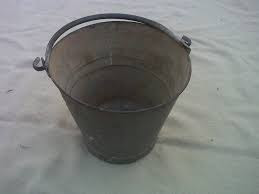
Deleting Empty-Bucket Words: God, Spirit, Love


For a long time, I and many others have been frustrated with 3 words: God, Spirit, and Love.

So much miscommunication with only 3 terms!

Because each of those words has so many different contrary meanings--so many contradictory fillings, that in articles, books, debates, group conversations, and dialogues, they almost mean
both nothing and everything.

Each is an empty bucket.


God, for instance, is a series of squiggles and a sound that various groups of humans pour/dump/force opposite stuff into whether it’s gold, pyrite, sludge, or manure.

And this has been going on for thousands of years among billions of humans in various diverse societies and social groups.

Repeatedly, when I’ve stated why I think God is real, atheists have belittled and denied the term as fallacious, while all sorts of religionists have strongly agreed and affirmed the Supreme Being.

But then confused chaos--semantic hell hurricanes up.

What the atheists and the religionists mean by the term is totally contrary to everything I think.

Indeed, often their negative or positive definitions of "God" are so horrific, they exceed all of my worst nightmares.

In the last couple of years, I have documented many detailed examples of this semantic confusion, this empty-bucket-ness. And it only seems to be getting worse.

While the basic definition in the Merriam-Webster Collegiate Dictionary:
"God: 1 capitalized : the supreme or ultimate reality,"
is denotative and open enough for myself, it doesn't work for many others.

Since, there is plenty of evidence already given on the confusions, I am going to jump right to suggestions for new terms.

God/Spirit:
Transcendent Reality, (or Ultimate or Essential) with an emphasis upon the concept that T.U.E.R. is “beyond” matter and energy.


Of course, already a few atheists have responded with the question what is “ultimate”?

That’s why I also mention “transcendent” and “essential,” and then recommend such questioners to the dictionary.

At least “ultimate reality” dispenses with the caricature that most atheists insist


the word “god” means—an “invisible super-omni-man in the sky.”

Where they got this simplistic, anthropomorphic view of God, I’m not sure,
but most theists don't think that is what God means.

I never thought God was an invisible powerful man in the sky,
not even when I was 8 years old, and a devout fundamentalist Baptist.

My new term will also, hopefully, unsettle religionists, and help them realize that I don’t believe in the God of creedal Christianity, Islam, Judaism, or Hinduism.


Love: Compassion, empathy, kindness, benevolence, altruism.


When I say that all humans ought to focus on ultimate reality and be compassionate and empathetic to all others, hopefully, that will be more clear than the old words and phrases.

Wish me luck;-).

In the Light,

Daniel Wilcox

Tuesday, September 17, 2013

Corny Quaker Humor

Today, let’s take a break from all the spiritual reflection, historical commentary, and theological analysis, and instead tell a few jokes.

But I can’t until the Spirit moves me;-) Besides we haven’t formed at least 7 committees to discuss it. Then give us a ‘minute’ to write it all out and pass it on? Whatever happened to “Be still and know”?)

Yes, I do have my corny side. In junior high, joking was my first name. You see, I’m from Nebraska—“Shucks, yah, I’m a cornhusker from way back. Lots of corn…

--

‘Herd about’ the Quaker cowgirl, Patty, who got caught and surrounded in a stampede?

--

Or what about that young Quaker girl who didn’t want to move from Philadelphia to Erie, Pennsylvania on Halloween.

She started crying and blubbering, “But, Dad, it will be too eerie!”


--

Consider the case of the Quaker student about to take a test on William Penn. He turned around in his desk and asked the girl behind him, “Got a ‘pencil, Vania’?”
--

This is a long one like so many teachers' lectures;-):

Or how about the 2 college freshmen? Their professor was lecturing, “When William Penn founded a colony in America, he chose the name Sylvania (forest or woods in Latin). But King Charles II chose otherwise and named it Pennsylvania for William’s father.”

“Even though Penn was of British aristocratic heritage, his conversion to faith in Christ, led him to seek to live a humble, altruistic life. Because of his honesty and respect toward the Indians, there was peace in Pennsylvania between the Indians and European immigrants for about 50 years!”

“But then came the next generation of Quakers. They didn’t live in the Light of God, but instead focused on themselves and cheated the Indians of much land. Then they worried about the various tribes attacking.”

Finally, the professor asked the class, “Do you see how the colony changed for the worse when the colonists turned from the Way of God?”

“Yes,” piped up a freshman, the later Quakers were “pensive-vain--

Yah” butted in another student.
--

Did you hear the one about the Quaker who raised ducks but didn’t like how they kept saying “Quack, quack.”

So he gave them crackers each time he got them to stop saying “quack, quack.” But then they started padding about his yard squawking, “Quacker, Quacker!”

Finally, he switched to feeding them with oats but wouldn't you know it, they squawked, “‘Quacker’ Oats!”
--

There is an old Quaker joke about a stranger who came into a Quaker meeting. Nothing was happening, so the man leaned over and asked one of the Friends, "When is the service going to start?"

The Friend whispered back, "The service will start outside after the end of worship."
--

What are the only 2 musical instruments that Quakers disapprove of? ‘Sax and violins.’
--

Heard about the Friendly little kitty who came into meeting, but got stepped on, and screeched, “Me-Owie”?

"Shhh," said the clerk. "This isn't a Pentecostal meeting!"

--

There was this elderly Quaker man who had constipation troubles. When he took his young pup out for a walk in the neighborhood, the puppy suddenly squatted, then turned and looked and barked, “Bow-el, wow!”

--


Lastly, there’s the Quaker store manager who refused to sell liquor, at least he said, not until he was in the “Spirits.”

Instead, he sold tea—and sold so much of that he loved totaling up his earnings!

Because you see, he was a ‘tea-totaler.’


Lightsomely,

Daniel Wilcox

Sunday, November 23, 2008

The Irony of Christianity

Isn't it ironic that in a number of recent studies and surveys--and in the ugly politcal and social discourse in the United States--Christians as a group are shown to be immoral, indeed less ethical in some cases than non-religious people? I am well aware studies and surveys can be skewed and that statistics are often misleading, however, these recent news reports are still troubling. Where in recent months do you see the Good News shared?

Must it not grieve Jesus (as he grieved outside of Jerusalem) to see his followers who are supposed to be known for their compassionate love, are instead known for their warring, their intolerance, their arrogance, their self-centered nationalism, ethnocentricism, divorce, hypocrisy, slander...The list seems endless.

Of course such dissonance between Christ's way of love, peacemaking, patience, mercy, compassion, purity, generosity, thankfulness, praise and Christians' immoral behavior is nothing new. But let us not dig up the awful past--the Inquisition, Crusades, Thirty Years War, English and American Civil Wars, slavery, colonialism, etc.

We can do nothing about the past. This generation--we are here and now--is called to live the Way of Christ, to share, to give, to help, to bring peace.

May God help us to live in the Center, not in the ways of the world.

Daniel Wilcox

Sunday, November 9, 2008

The Nature of Baptism

As a Friend I am convinced that baptism is primarily a spiritual reality. For one reason the physical ritual includes all sorts of Christians who claim the other brands aren't even Christians. They attack each other verbally and often have slaughtered each other in so many Christian-sponsored wars.

How can there be ONE baptism in one Spirit when that happens?

And think of the many thousands of other disagreements among Christians:
Calvinists declare there are no Gifts of the Spirit but charismatics and Pentecostals claim the opposite.
Evangelicals claim the Bible is inerrant but liberals state Scripture has many errors.
Fundamentalists argue the Bible is scientifically accurate, evolution is a satanic lie, and the end of the world is coming in this generation
while mainline Christians think those views are ludicrous.

There are many Christians who support killing unarmed civilians in war, who think that the nuclear weapons are given to the U.S. by God, that using torture is justified, that becoming wealthy doesn't mean one needs to share with the world's impoverished.

Where is the love of Christ in this? Where is the Spirit of their formal baptism?

It seems rather that true baptism is spiritual and unseen, when God's Spirit begins to slowly transform a person toward the Truth, the Good, and the Loving.

Physical acts of baptism may be used by some who derive much comfort or inspiration from outward signs, but the danger always remains.

Allegedly, most Germans of the Great War and the Nazi Holocaust War (WWII) era were baptized
yet that didn't show forth in their lives as they went out to slaughter other Christians of the Allies.

And Allied baptized Christians returned the evil favor, urged on by war promoters such as American evangelist Billy Sunday.

Don't forget the Thirty Years War, the American Civil War, and the English Civil War (where Cromwell's "New Model Army" which killed while singing Bible verses! attacked the King's forces who also killed for Jesus Christ).

Sounds more like a baptism into injustice and sin.

No wonder Jesus wept.