Awake to Seek
Wake
Up and suit yourself,
Into the floundering pattern-mudded
Consciousness of this our finite skin---
Into a being 'berthed' bemused, beseemed morning
So like the proverbial hog, boar or sow of the round ring
Who as life's suitors get caught by our snouted 'knows;'
Beshrewed, besotted, bemired so we instinctively grunt,
Tempted by our sensual, careening awareness
Or our dutiful grindstoned routine,
We press our life's suit 'til evening
Or wallow down
To our suited
Wake.
1st pub. in Moria Poetry
--
in the time of Darkness
to commune with the Transcendently Real
in the midst of our utter loss
in the darkened night of alone
to contemplate despite a soon demise,
to live in the Infinite's silence
deafens our wayward heart and leaves
our confused mind bereft;
the Divine answers no pleas
our anguished request left--
Selah
to hope against midnight's despair
to trust in all that is blessedly Fair,
so Beautiful, Right, Good and Just
despite our world history of horror
for naught, and absurd;
we seek
a slight glimmer
of the billion-lighted
meaning shimmering briefly
in our finite reason and creative awareness,
before the cosmos spun into place,
eternally ever always
Ultimate
Becoming.
Selah
In the Light,
Dan Wilcox
Showing posts with label Reason. Show all posts
Showing posts with label Reason. Show all posts
Tuesday, January 30, 2024


Wednesday, December 27, 2023
Looking into 2024, here's my last Life-Stance views in one page about Reality, Life, and History
MY LIFE-STANCE in one page --JANUARY 2024
1 REALITY—is MEANINGFUL--the Cosmos, Life, Natural Laws, Moral Truths, Math, Reason, Scientific Method, Technology, Creativity...
All humans have worth within themselves!
And to a lesser degree, other primates and sentient animals, worth in themselves...
 I suppose one could say that plants, bugs, rocks, asteroids, planets, solar systems, quasars, Black Holes, gravity, relativity, etc. have worth in themselves, but since none of those are conscious, aware, rational, etc., it’s probably a category error to make such a huge judgment about inert things or unconscious processes.
Despite the ruthless, impersonal nature of Deep Time evolutionary change over at least the last 3.7 billions years of survival of the fittest, and the luckiest...
And the large number of human thinkers who advocate atheism, naturalism, materialism, anti-realism, and others who claim revealed religions, ideologies of extreme left and extreme right...
Those are false, bind alleys into nihilism, denying all human worth, purpose, meaning, morality, reason, math etc.
2 Instead, Like many brilliant famous scientists have emphasized (including Albert Einstein), Ultimate/Essential/Transcendent Nature of Reality is unknown to all finite, limited humans-FAR beyond anything we are capable of thinking or concluding.
Who knows if there are advanced species in the Cosmos like the science writer Carl Sagan speculated?
HOWEVER, many brilliant thinkers have SPECULATED on possible answers, one of the most recent being that the nature of REALITY is PROCESS, Not substance, Not Irrational, Not Chance...
And that seeking the ultimate doesn’t come by reductionism down to only tiny particles like theoretical physicist and atheist Brian Greene states (in The Elegant Universe) and others such as Sean M. Carroll.
Other theoretical physicists think we need to focus upwards to the possible Multi-Verse for finding ultimate significance.
Different views come from other famous cosmologists such as Paul Davies, George F. R. Ellis, the South African theoretical physicist “who is considered the world leader in relativity and cosmology. He co-wrote the book, The Large Scale of Space-Time with Stephen Hawking.”
https://royalsociety.org/people/george-ellis-11396/....
3. When all has been said and done in my 77-years-of-life, I realize now that Family, Friends, etc. don’t care as much as we old guys would like.
BUT, I do know that Life isn’t about me.
Heck, over a million Americans AS IMPORTANT AS ME died in the COVID pandemic in only a couple of years. Does anyone in particular care?
NO!
Many current American leaders even deny social distancing, masking, and the vaccinations’ worth and claim, instead, that COVID was all a “Democratic scam” and the completely false huge lies about alleged massive fraud in the 2020 election (of which there is not even a single shred of evidence. Even some Republican leaders such as those in Georgia emphasize there is no basis for the false claims)!
--
I’m just one of billions of humans inhabiting this tiny planet in a minor solar system on the edge of a galaxy among billions of galaxies...
And, I know for a fact, though I can’t imagine it, that my brief important time is almost up. Like my beloved dad 10 years ago, I will in the not to distant future, breathe my last.
And 2 undertakers will arrive like orderlies, will wrap my corpse in a winding sheet, bag my body onto a rolling cart, and haul it out.
BUT I AM THANKFUL FOR ALL THE WONDERFUL TIMES I’VE EXPERIENCED, THE OTHER HUMANS I’VE CARED FOR, AND THE AMAZING FACTS I’VE LEARNED IN MY LONG LIFE.
HOPEFULLY, the TRUE GOD WILL REMEMBER ME, and some humans I’ve known will think of me once and a while as they continue to live on into Reality’s FUTURE.
Dan Wilcox, the aged stroked mutant;-)
12/27/23
1 REALITY—is MEANINGFUL--the Cosmos, Life, Natural Laws, Moral Truths, Math, Reason, Scientific Method, Technology, Creativity...
All humans have worth within themselves!
And to a lesser degree, other primates and sentient animals, worth in themselves...

Despite the ruthless, impersonal nature of Deep Time evolutionary change over at least the last 3.7 billions years of survival of the fittest, and the luckiest...
And the large number of human thinkers who advocate atheism, naturalism, materialism, anti-realism, and others who claim revealed religions, ideologies of extreme left and extreme right...
Those are false, bind alleys into nihilism, denying all human worth, purpose, meaning, morality, reason, math etc.
2 Instead, Like many brilliant famous scientists have emphasized (including Albert Einstein), Ultimate/Essential/Transcendent Nature of Reality is unknown to all finite, limited humans-FAR beyond anything we are capable of thinking or concluding.
Who knows if there are advanced species in the Cosmos like the science writer Carl Sagan speculated?
HOWEVER, many brilliant thinkers have SPECULATED on possible answers, one of the most recent being that the nature of REALITY is PROCESS, Not substance, Not Irrational, Not Chance...
And that seeking the ultimate doesn’t come by reductionism down to only tiny particles like theoretical physicist and atheist Brian Greene states (in The Elegant Universe) and others such as Sean M. Carroll.
Other theoretical physicists think we need to focus upwards to the possible Multi-Verse for finding ultimate significance.
Different views come from other famous cosmologists such as Paul Davies, George F. R. Ellis, the South African theoretical physicist “who is considered the world leader in relativity and cosmology. He co-wrote the book, The Large Scale of Space-Time with Stephen Hawking.”
https://royalsociety.org/people/george-ellis-11396/....
3. When all has been said and done in my 77-years-of-life, I realize now that Family, Friends, etc. don’t care as much as we old guys would like.
BUT, I do know that Life isn’t about me.
Heck, over a million Americans AS IMPORTANT AS ME died in the COVID pandemic in only a couple of years. Does anyone in particular care?
NO!
Many current American leaders even deny social distancing, masking, and the vaccinations’ worth and claim, instead, that COVID was all a “Democratic scam” and the completely false huge lies about alleged massive fraud in the 2020 election (of which there is not even a single shred of evidence. Even some Republican leaders such as those in Georgia emphasize there is no basis for the false claims)!
--
I’m just one of billions of humans inhabiting this tiny planet in a minor solar system on the edge of a galaxy among billions of galaxies...
And, I know for a fact, though I can’t imagine it, that my brief important time is almost up. Like my beloved dad 10 years ago, I will in the not to distant future, breathe my last.
And 2 undertakers will arrive like orderlies, will wrap my corpse in a winding sheet, bag my body onto a rolling cart, and haul it out.
BUT I AM THANKFUL FOR ALL THE WONDERFUL TIMES I’VE EXPERIENCED, THE OTHER HUMANS I’VE CARED FOR, AND THE AMAZING FACTS I’VE LEARNED IN MY LONG LIFE.
HOPEFULLY, the TRUE GOD WILL REMEMBER ME, and some humans I’ve known will think of me once and a while as they continue to live on into Reality’s FUTURE.
Dan Wilcox, the aged stroked mutant;-)
12/27/23
Wednesday, May 18, 2022
Reflecting on the Awe and Wonder of Reality
If we as humans reject the horrific unethical beliefs of many Muslims, Christians, and Hindus such as their claims that a god plans all evils, natural disasters, plagues, famines, murders, rapes, and human slaughters...
And we already have rejected delusions and fanciful mythological stories of religions in general as various thoughtful theists have done since Plato...
 HOW
HOW
do we limited human primates go about thinking about “Ultimate Reality”
(usually and traditionally termed “God”)?
Ah, the God question.
WHY?
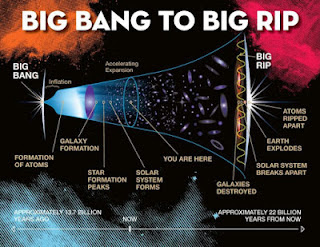
Nothing like trying to solve the nature of existence, multi-billions of years of cosmic history, why the Big Bang happened, and why is it possible (to paraphrase Einstein) that mere primates came to self-aware consciousness
and the ability for creativity, reason,
science, technology, aesthetics, music,
moral realism including justics, human rights, and compassion.
The how is often answered by cosmologists speculating about multi-verses and quantum events. Fascinating stuff. As for humanity’s sometime actions of altruism, evolutionary biologist Richard Dawkins speculates that ethical ideals might have come about by a “misfiring” of evolution.
However open agnostics such as the astronomer Chris Impey of the University of Arizona-Tucson raise very good questions about the unusual anomaly of Homo
sapiens in the midst of what appears to be an unconscious, thoughtless, amoral cosmos.
Astronomer Impey: “If the universe contained nothing more than forces operating on inanimate matter, it would not
be very interesting."
"The presence of sentient life-forms like us
(and perhaps unlike us) is the zest, or
the special ingredient, that gives cosmic
history dramatic tension."
"We’re made
of tiny subatomic particles and are part
of a vast space-time arena, yet
we hold both extremes
in our heads.”
How It Began By Chris Impey
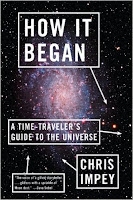 Yes, the amazing ability of conscious primates to hold the concept of the macrocosm to the microcosm within each of our heads, to create new things which never existed, to have a sense of ought which often thwarts what is biologically advantageous...
So, if we humans want to move beyond our personal feelings and inner intuition in regard to Ultimate Reality, we need to look to brilliant scientists and philosophical thinkers.
While atheist thinkers have posited that everything is due to cosmic
Chance (Jacques Monad, Stephen Jay Gould)
or
Necessity/Determinism (Sam Harris, Jerry Coyne),
in striking contrast
astrophysicists such as George Ellis,
thinkers such as mathematician/philosopher
Alfred Lord Whitehead
and philosopher Charles Hartshorne
think that Meaning and Creativity and the Good
are at the center
and beginning of
everything.
Consciousness, creativity, reason, morality, aesthetics are somehow inherent
in the essential essence of the cosmos,
not meaningless anomalies like atheists claim.
Since Charles Hartshorne comes from a Quaker background, attended Haverford Quaker College
and is the most recent brilliant theistic thinker,
let’s first take a look at him
and his concepts and philosophy
which he terms,
panentheism.
 Earliest Spiral Galaxy
For Hartshorne, the future is OPEN. Creativity, possibility are there. God and all conscious life have real alternative choices to create.
"A hallmark of Hartshorne’s neoclassical theism is that the universe is a joint creative product of (a) the lesser creators that are the creatures, localized in space and time, and (b) the eminent creator which is God whose influence extends to every creature that ever has or that ever will exist."
--Donald Wayne Viney, Pittsburg State University
http://www.iep.utm.edu/hart-d-t/
"Charles Hartshorne, (born June 5, 1897, Kittanning, Pennsylvania, U.S.—died October 10, 2000, Austin, Texas), American philosopher, theologian, and educator known as the most influential proponent of a “process philosophy,” which considers God a participant in cosmic evolution."
"The descendant of Quakers and son of an Episcopalian minister, Hartshorne attended Haverford College before serving as a medical orderly in World War I. He completed his undergraduate education at Harvard University...earned a doctorate in philosophy in 1923. Hartshorne studied in Germany (1923–25), where he met Martin Heidegger and Edmund Husserl."
"He returned to lecture at Harvard (1925–28), after which he taught philosophy at the University of Chicago (1928–55) and at Emory University in Atlanta,
Georgia (1955–62). He then taught...philosophy at the University of Texas--Austin...He also served as president of the American Philosophical Association and the Metaphysical Society of America."
http://www.britannica.com/biography/Charles-Hartshorne
In the LIGHT,
Dan Wilcox
And we already have rejected delusions and fanciful mythological stories of religions in general as various thoughtful theists have done since Plato...
do we limited human primates go about thinking about “Ultimate Reality”
(usually and traditionally termed “God”)?
Ah, the God question.
WHY?
Nothing like trying to solve the nature of existence, multi-billions of years of cosmic history, why the Big Bang happened, and why is it possible (to paraphrase Einstein) that mere primates came to self-aware consciousness
and the ability for creativity, reason,
science, technology, aesthetics, music,
moral realism including justics, human rights, and compassion.
The how is often answered by cosmologists speculating about multi-verses and quantum events. Fascinating stuff. As for humanity’s sometime actions of altruism, evolutionary biologist Richard Dawkins speculates that ethical ideals might have come about by a “misfiring” of evolution.
However open agnostics such as the astronomer Chris Impey of the University of Arizona-Tucson raise very good questions about the unusual anomaly of Homo
sapiens in the midst of what appears to be an unconscious, thoughtless, amoral cosmos.
Astronomer Impey: “If the universe contained nothing more than forces operating on inanimate matter, it would not
be very interesting."
"The presence of sentient life-forms like us
(and perhaps unlike us) is the zest, or
the special ingredient, that gives cosmic
history dramatic tension."
"We’re made
of tiny subatomic particles and are part
of a vast space-time arena, yet
we hold both extremes
in our heads.”
How It Began By Chris Impey

So, if we humans want to move beyond our personal feelings and inner intuition in regard to Ultimate Reality, we need to look to brilliant scientists and philosophical thinkers.
While atheist thinkers have posited that everything is due to cosmic
Chance (Jacques Monad, Stephen Jay Gould)
or
Necessity/Determinism (Sam Harris, Jerry Coyne),
in striking contrast
astrophysicists such as George Ellis,
thinkers such as mathematician/philosopher
Alfred Lord Whitehead
and philosopher Charles Hartshorne
think that Meaning and Creativity and the Good
are at the center
and beginning of
everything.
Consciousness, creativity, reason, morality, aesthetics are somehow inherent
in the essential essence of the cosmos,
not meaningless anomalies like atheists claim.
Since Charles Hartshorne comes from a Quaker background, attended Haverford Quaker College
and is the most recent brilliant theistic thinker,
let’s first take a look at him
and his concepts and philosophy
which he terms,
panentheism.

For Hartshorne, the future is OPEN. Creativity, possibility are there. God and all conscious life have real alternative choices to create.
"A hallmark of Hartshorne’s neoclassical theism is that the universe is a joint creative product of (a) the lesser creators that are the creatures, localized in space and time, and (b) the eminent creator which is God whose influence extends to every creature that ever has or that ever will exist."
--Donald Wayne Viney, Pittsburg State University
http://www.iep.utm.edu/hart-d-t/
"Charles Hartshorne, (born June 5, 1897, Kittanning, Pennsylvania, U.S.—died October 10, 2000, Austin, Texas), American philosopher, theologian, and educator known as the most influential proponent of a “process philosophy,” which considers God a participant in cosmic evolution."
"The descendant of Quakers and son of an Episcopalian minister, Hartshorne attended Haverford College before serving as a medical orderly in World War I. He completed his undergraduate education at Harvard University...earned a doctorate in philosophy in 1923. Hartshorne studied in Germany (1923–25), where he met Martin Heidegger and Edmund Husserl."
"He returned to lecture at Harvard (1925–28), after which he taught philosophy at the University of Chicago (1928–55) and at Emory University in Atlanta,
Georgia (1955–62). He then taught...philosophy at the University of Texas--Austin...He also served as president of the American Philosophical Association and the Metaphysical Society of America."
http://www.britannica.com/biography/Charles-Hartshorne
In the LIGHT,
Dan Wilcox
Saturday, July 31, 2021
WHAT IS REALITY?
2 Divergent, Contradictory Ways of Human Perceiving
Poetry versus prose, fact versus story, symbolic versus technologic, intuitive versus rational, emotion versus logic, experience versus learning, reason versus tradition,
religion versus science, transcendent versus temporal, sacred versus secular, spiritual versus material, supernatural versus natural, personal versus impersonal—
What bipolar opposites!
 Yet they both exist within every one of us, the human species.
HOWEVER some modern thinkers claim they are irreconcilable.
Yet from a different angle, these 2 ways of perceiving, “seeing,” so often divergent and opposite, do sometimes interrelate.
They aren’t always extreme clashers/antithetical/ contradictory/mutually incompatible/ not always (as in never shall the twain meet) like “fundamentalists” of religion and “scientilists” of science adamantly claim--incompatible.
But they do, indeed, offer 2 very different ways of perceiving reality.
The HUGE question is whether those perceptions are mutally exclusive or complimentary, even married as in the old saw--opposites attract:-).
The issue of these 2 divergent ways of perceiving is like the old joke about sex: Is the word, sex, an acronym for “sensitive experiential ecstasy”?
OR
the short term for biological interaction between a primate with XY chromosomes with one with XX chromosomes?
Or like the joke pun about the elephant versus the mouse in the room?
It’s ‘irrelevant’;- like these last few lines.)
-- #1 Our first contrast:
POETRY/STORY:
From the Jewish, Christian, Islamic religions, the ancient text of Genesis (written 500 B.C.E. in Babylon by Jewish scribes as a poem to honor the 7th day of Shabbat)
Genesis 1 In the beginning of G-d’s preparing the heavens and the earth — 2 the earth hath existed waste and void, and darkness on the face of the deep, and the Wind of G-d fluttering on the face of the waters, And G-d said, "Let light be; and light is."
On the 4th day of Creation: 14 And G-d said, "Let luminaries be in the expanse of the heavens...and the stars..." And there is an evening and there is a morning, day 4.
VERSUS
PROSE/FACT:
From the Lecture 113--8. Early Universe by astronomer Chris Impey, University of Arizona, Tucson
"...the frontier of knowledge is...the Planck Era. An amazing ten to the minus 43 seconds after the big bang.
“Conceptually, this is a time in the infinite universe when space itself was as curved as a particle. When the distinction between space and time did not exist. Or the objects in space and the space that contain them. This was when the universe was smaller than the smallest subatomic particle.
“Just thinking about the Big Bang, it's an extraordinary event. A 100 billion galaxies and a 100,000 billion, billion stars they contained were all compressed into a space smaller than a sub atomic particle. What the big bang theory really says is that... The universe itself was created in a quantum event...
“...a theory of black holes, of galaxies, and a theory of, of atoms, of light, of force. So, we have two great theories of physics, the theory of the very big, Einstein's Theory of Relativity, and the theory of the very small, the Quantum Theory...
“The exponential expansion of inflation essentially blew up quantum fluctuations to macroscopic size, where they would subsequently become the seeds for galaxy formation. That same expansion of course, is responsible for the flatness and smoothness of space. Whatever the initial curvature, and it must have been extreme, space has now inflated to an enormous size, or space curvature in any large region is negligible.
“This idea puts the microwave sky in a whole new light. What is says is that when we look at the microwave background radiation through a radio telescope, we're look at quantum fluctuations writ large on the sky, the seeds for galaxy formation.
“So hypothetically, about a microsecond after the Big Bang, the universe would have had a temperature of about a trillion degrees. That's the energy from which neutrons and protons can have their anti-particle pairs created spontaneously out of pure energy. Below that temperature, or after that time, such creation is not possible. The speculation is that there was a very slight imbalance in the amount of matter versus anti-matter.
“From the time a few minutes after the Big Bang until just under 400,000 years after the Big Bang, the universe was simply an expanding and cooling plasma, cooling from a temperature of 10 million Kelvin down to about 3,000 Kelvin. When the universe reached this size, density and temperature, it reached the point where electrons could combine with protons to form stable hydrogen and also helium atoms.
“It takes perhaps 100 or 200 million years after the Big Bang for the first objects to switch on as light bulbs in the sky. Stars and galaxies." https://www.coursera.org/learn/astro/lecture/RFkHq/8-early-universe
-- The first account is poetic story, from us finite primates looking up and creating, telling a narrative of meaning.
The second account is factual prose, from us observing, discerning objective facts in the cosmos.
Are these two perspectives totally contradictory?
Is a complete divorce necessary as well as the killing of the former, like some secular scientists such as biologists Jerry Coyne and Richard Dawkins and astrophysicist Brian Greene think?
For instance, Greene, states: “The ancient declaration that "nothing exists but atoms and the void," is not far from the truth.” Though Greene does add, “But what's wondrous is all that atoms in the void, when arranged in organized configurations, can accomplish.”
Of course, then the question is HOW and WHY?
IF there is no story, no creator, no transcendence, no worth, no meaning, no moral realism, no human rights, etc.—“nothing except atoms and the void” HOW/WHY did those multi-trillions of “organized configurations” in Reality come about?!
What is the “void”?
I suppose many famous atheists could be correct when they posit CHANCE brought forth “organized configurations.” Given enough to infinity, possibly laws of physics, galaxies, solar systems, Life, consciousness, reason, math, stories, morals, etc. could have luckily appeared into existence over deep time, though I don’t see how.
Or why.
OR is the very contrary opposite account of what is REAL, actually the truth?
Reality is a sharing couple of both meaningful story and atoms-matter-energy facts, committed to interaction like geneticist Francis Collins, astrophysicist George Ellis, and astronomer Chris Impey think?
According to Chris Impey, the two contrary views are interrelated:
"We're made of tiny subatomic particles and are part of a vast space-time arena, yet we hold both extremes in our heads...the powerful narrative that science has created to help us organize and understand the world.
“We have a story of how the universe grew from a jot of space-time to the splendor of 50 billion galaxies. We have a story of how a broth of molecules on the primeval Earth turned into flesh and blood.
“And we have a story of how one of the millions of species evolved to hold those 50 billion galaxies inside its head." How It Began page xii, How It Ends, page 11 By Chris Impey
-- At this aged point in my long life of seeking and searching, BOTH the storied poetic and the factual matter-energy intrigue me and guide me.
I love both ways of perceiving.
In the Light,
Dan Wilcox
Poetry versus prose, fact versus story, symbolic versus technologic, intuitive versus rational, emotion versus logic, experience versus learning, reason versus tradition,
religion versus science, transcendent versus temporal, sacred versus secular, spiritual versus material, supernatural versus natural, personal versus impersonal—
What bipolar opposites!

HOWEVER some modern thinkers claim they are irreconcilable.
Yet from a different angle, these 2 ways of perceiving, “seeing,” so often divergent and opposite, do sometimes interrelate.
They aren’t always extreme clashers/antithetical/ contradictory/mutually incompatible/ not always (as in never shall the twain meet) like “fundamentalists” of religion and “scientilists” of science adamantly claim--incompatible.
But they do, indeed, offer 2 very different ways of perceiving reality.
The HUGE question is whether those perceptions are mutally exclusive or complimentary, even married as in the old saw--opposites attract:-).
The issue of these 2 divergent ways of perceiving is like the old joke about sex: Is the word, sex, an acronym for “sensitive experiential ecstasy”?
OR
the short term for biological interaction between a primate with XY chromosomes with one with XX chromosomes?
Or like the joke pun about the elephant versus the mouse in the room?
It’s ‘irrelevant’;- like these last few lines.)
-- #1 Our first contrast:
POETRY/STORY:
From the Jewish, Christian, Islamic religions, the ancient text of Genesis (written 500 B.C.E. in Babylon by Jewish scribes as a poem to honor the 7th day of Shabbat)
Genesis 1 In the beginning of G-d’s preparing the heavens and the earth — 2 the earth hath existed waste and void, and darkness on the face of the deep, and the Wind of G-d fluttering on the face of the waters, And G-d said, "Let light be; and light is."
On the 4th day of Creation: 14 And G-d said, "Let luminaries be in the expanse of the heavens...and the stars..." And there is an evening and there is a morning, day 4.
VERSUS
PROSE/FACT:
From the Lecture 113--8. Early Universe by astronomer Chris Impey, University of Arizona, Tucson
"...the frontier of knowledge is...the Planck Era. An amazing ten to the minus 43 seconds after the big bang.
“Conceptually, this is a time in the infinite universe when space itself was as curved as a particle. When the distinction between space and time did not exist. Or the objects in space and the space that contain them. This was when the universe was smaller than the smallest subatomic particle.
“Just thinking about the Big Bang, it's an extraordinary event. A 100 billion galaxies and a 100,000 billion, billion stars they contained were all compressed into a space smaller than a sub atomic particle. What the big bang theory really says is that... The universe itself was created in a quantum event...
“...a theory of black holes, of galaxies, and a theory of, of atoms, of light, of force. So, we have two great theories of physics, the theory of the very big, Einstein's Theory of Relativity, and the theory of the very small, the Quantum Theory...
“The exponential expansion of inflation essentially blew up quantum fluctuations to macroscopic size, where they would subsequently become the seeds for galaxy formation. That same expansion of course, is responsible for the flatness and smoothness of space. Whatever the initial curvature, and it must have been extreme, space has now inflated to an enormous size, or space curvature in any large region is negligible.
“This idea puts the microwave sky in a whole new light. What is says is that when we look at the microwave background radiation through a radio telescope, we're look at quantum fluctuations writ large on the sky, the seeds for galaxy formation.
“So hypothetically, about a microsecond after the Big Bang, the universe would have had a temperature of about a trillion degrees. That's the energy from which neutrons and protons can have their anti-particle pairs created spontaneously out of pure energy. Below that temperature, or after that time, such creation is not possible. The speculation is that there was a very slight imbalance in the amount of matter versus anti-matter.
“From the time a few minutes after the Big Bang until just under 400,000 years after the Big Bang, the universe was simply an expanding and cooling plasma, cooling from a temperature of 10 million Kelvin down to about 3,000 Kelvin. When the universe reached this size, density and temperature, it reached the point where electrons could combine with protons to form stable hydrogen and also helium atoms.
“It takes perhaps 100 or 200 million years after the Big Bang for the first objects to switch on as light bulbs in the sky. Stars and galaxies." https://www.coursera.org/learn/astro/lecture/RFkHq/8-early-universe
-- The first account is poetic story, from us finite primates looking up and creating, telling a narrative of meaning.
The second account is factual prose, from us observing, discerning objective facts in the cosmos.
Are these two perspectives totally contradictory?
Is a complete divorce necessary as well as the killing of the former, like some secular scientists such as biologists Jerry Coyne and Richard Dawkins and astrophysicist Brian Greene think?
For instance, Greene, states: “The ancient declaration that "nothing exists but atoms and the void," is not far from the truth.” Though Greene does add, “But what's wondrous is all that atoms in the void, when arranged in organized configurations, can accomplish.”
Of course, then the question is HOW and WHY?
IF there is no story, no creator, no transcendence, no worth, no meaning, no moral realism, no human rights, etc.—“nothing except atoms and the void” HOW/WHY did those multi-trillions of “organized configurations” in Reality come about?!
What is the “void”?
I suppose many famous atheists could be correct when they posit CHANCE brought forth “organized configurations.” Given enough to infinity, possibly laws of physics, galaxies, solar systems, Life, consciousness, reason, math, stories, morals, etc. could have luckily appeared into existence over deep time, though I don’t see how.
Or why.
OR is the very contrary opposite account of what is REAL, actually the truth?
Reality is a sharing couple of both meaningful story and atoms-matter-energy facts, committed to interaction like geneticist Francis Collins, astrophysicist George Ellis, and astronomer Chris Impey think?
According to Chris Impey, the two contrary views are interrelated:
"We're made of tiny subatomic particles and are part of a vast space-time arena, yet we hold both extremes in our heads...the powerful narrative that science has created to help us organize and understand the world.
“We have a story of how the universe grew from a jot of space-time to the splendor of 50 billion galaxies. We have a story of how a broth of molecules on the primeval Earth turned into flesh and blood.
“And we have a story of how one of the millions of species evolved to hold those 50 billion galaxies inside its head." How It Began page xii, How It Ends, page 11 By Chris Impey
-- At this aged point in my long life of seeking and searching, BOTH the storied poetic and the factual matter-energy intrigue me and guide me.
I love both ways of perceiving.
In the Light,
Dan Wilcox
Monday, April 26, 2021
Social Justice for all because all humans are of inherent worth and equal
Powerful words indeed, but so lacking in this current time of extremism from the right (Trumpism, Proud Boys, Oath Keepers, most Republican leaders)
and the left (Marxist-CRT leaders, BlMers, Antifa, many Democrats).
Both sides engage in endless name-calling, demeaning, and bullying. And vandalism, violence, propaganda, and destruction...
 Very strange that Donald Trump even calls his leader of the Republicans in the Senate, Mitch McConnell, an s.o.b.! Tragically, these nationalistic leaders and the rioters in the capitol building and elsewhere behave like the racist segregationists who attacked nonviolent Blacks in the 60's and 50's and before.
Radical Democrats such as Rashida Tlaib attack all law enforcement as being racist who intentionally kill Blacks. They argue for the defundng and abolishing of the police! Blmers yell obscenities, vandalize, and physically attack officers. This generation for unknown reasons has adopted the extremist views, hateful speech, and violent actions of the late 60's by POC.
 What ever happened to the reconciling ways of Martin Luther King, the early SNCC leaders, Bayard Rustin, John Lewis, etc.?
As an old radical leftist from the early 60's (early member of S.D.S.), I am baffled by the obscenity-heavy hateful speech by the right and left. Both sides seem driven by intolerance, lack of empathy, stereotyping, and downright lying.
A few words from King that this generation needs: "Nonviolence means avoiding not only eternal physical violenc but also internal violence of spirit..."
"The non-violent approach does not immediately change the hearts of the oppressor. It first does something to the hearts and souls of those committed to it. It gives them a new self-respect; it calls up resources of strength and courage that they did not know they had. Finally, it reaches the opponent and so stirs his conscience that reconciliation becomes a reality."
And, I remember in contrast the fervent leftist leader and atheist of our S.D.S. Group at the University of Nebraska. He spent months in the South working for civil Rights in 1965, was a passionate advocate for human rights, justice, and racial reconciliation.
But unlike many leftists of the present, he talked rationally, didn't use negative propagandistic slogans, didn't verbally attack and name-call, didn't fill his speeches with obscenities and demeaning statements against those of the opposite side.
I suppose one could say that the S.D.S. leader was something of a hero to me.
Social justice doesn't come by pride, propaganda, hateful verbal attacks, obscenities, vandalism, violence and rioting.
Justice comes by concern, reasoned explanations, careful reconciling words, listening, empathy, kindness, altruism, generosity, helpfulness, and nonviolence.
In the Light,
Dan Wilcox
and the left (Marxist-CRT leaders, BlMers, Antifa, many Democrats).
Both sides engage in endless name-calling, demeaning, and bullying. And vandalism, violence, propaganda, and destruction...

Radical Democrats such as Rashida Tlaib attack all law enforcement as being racist who intentionally kill Blacks. They argue for the defundng and abolishing of the police! Blmers yell obscenities, vandalize, and physically attack officers. This generation for unknown reasons has adopted the extremist views, hateful speech, and violent actions of the late 60's by POC.

As an old radical leftist from the early 60's (early member of S.D.S.), I am baffled by the obscenity-heavy hateful speech by the right and left. Both sides seem driven by intolerance, lack of empathy, stereotyping, and downright lying.
A few words from King that this generation needs: "Nonviolence means avoiding not only eternal physical violenc but also internal violence of spirit..."
"The non-violent approach does not immediately change the hearts of the oppressor. It first does something to the hearts and souls of those committed to it. It gives them a new self-respect; it calls up resources of strength and courage that they did not know they had. Finally, it reaches the opponent and so stirs his conscience that reconciliation becomes a reality."
And, I remember in contrast the fervent leftist leader and atheist of our S.D.S. Group at the University of Nebraska. He spent months in the South working for civil Rights in 1965, was a passionate advocate for human rights, justice, and racial reconciliation.
But unlike many leftists of the present, he talked rationally, didn't use negative propagandistic slogans, didn't verbally attack and name-call, didn't fill his speeches with obscenities and demeaning statements against those of the opposite side.
I suppose one could say that the S.D.S. leader was something of a hero to me.
Social justice doesn't come by pride, propaganda, hateful verbal attacks, obscenities, vandalism, violence and rioting.
Justice comes by concern, reasoned explanations, careful reconciling words, listening, empathy, kindness, altruism, generosity, helpfulness, and nonviolence.
In the Light,
Dan Wilcox
Tuesday, February 9, 2021
Part #2: Prayer and Fishhooks
Prayer and Fishhooks*
Our third daughter, Hope, learned-disabled early, Struggling with the squiggles and numeric symbols
Of unseen realities, of knowing, that set the stars In motion and our human minds in transition.
How dangerous those fish-hooked praying supplications
Her childish zest died while, as her father and provider, I practiced disabling late, raised to belief's unreason
 In the rigid way of Huck's Miss Watson, so stubborn
In righteous doctrine, ignoring our doctor's suggestion,
Not giving Hope medication, but certain in literal petition.
In the rigid way of Huck's Miss Watson, so stubborn
In righteous doctrine, ignoring our doctor's suggestion,
Not giving Hope medication, but certain in literal petition.
How dangerous those fish-hooked praying supplications
So I prayed time-round-the-three for our daughter's minded healing, But just like gullible Finn and his never-gotten fishhooks,
Hope got none, and I— doubt, ill-gotten mishap, and bilge, Eventually lessening into cynicism, the wounded death Of an ash-filled, but empty-petitioning/requesting mouth.
How dangerous those fish-hooked praying supplications
Yet unlike Huck, to this day I keep reeling out petitions, Focusing like the Widow (Huck's other guardian),
On heartened prayer, the learning of spiritual gifts; But not even the gentle fish lures of patience
And boundless joy ever ripple my faithless way; I, too, become the lost orphan in the dying of trust.
How dangerous those fish-hooked praying supplications
No longer a fisher of miracles in the doubtful churning, Of the endless surging views of oceans seven
The world round, I struggle between trust And reason, earnest but lost in cruel confusion
Fearing those extremes — nihilistic negation And fishy delusion — doubting all to a hellish end.
How dangerous those fish-hooked praying supplications
Still rises the good news of caring medicine: Briefly free of false hooks, we gave our dear Hope,
So dead to minded school, the late prescription And she was upward raised, yes, recovering soon A zest for learning — early for her, way late for me –
How wondrous thoughtful reason-decided invocations
Except to say the real hook of it all is that True knowing is not gulping barbs of pious deceit,
Nor being gilled or gulled into the dying of truth, But yearning and learning — like Descartes and Kant
Of old — finding in humble, reasoned trust The poetry and prose of spiritual growth, A Godly way of reasoned becoming,
How wondrous thoughtful reason-based deliberations
--Dan Wilcox
First published in The Centrifugal Eye then in the published poetry collection, Psalms, Yawps, and Howls
-- *From Huck Finn: “Well I got a good going-over in the morning from old Miss Watson on account of my clothes; but the widow she didn't scold, but only cleaned off the grease and clay, and looked so sorry that I thought I would behave awhile if I could. Then Miss Watson she took me in the closet and prayed, but nothing come of it."
"She told me to pray every day, and whatever I asked for I would get it. But it warn't so I tried it. Once I got a fish-line, but no hooks. It warn't any good to me without hooks."
"I tried for the hooks three or four times, but somehow I couldn't make it work. By and by, one day, I asked Miss Watson to try for me, but she said I was a fool. She never told me why, and I couldn't make it out no way."
"I set down one time back in the woods, and had a long think about it. I says to myself, if a body can get anything they pray for...why can't the widow get back her silver snuffbox that was stole? Why can't Miss Watson fat up?"
"No, says I to myself, there ain't nothing in it. I went and told the widow about it, and she said the thing a body could get by praying for it was "spiritual gifts." This was too many for me, but she told me what she meant -- I must help other people, and do everything I could for other people, and look out for them all the time, and never think about myself."
"This was including Miss Watson, as I took it. I went out in the woods and turned it over in my mind a long time, but I couldn't see no advantage about it -- except for the other people; so at last I reckoned I wouldn't worry about it any more, but just let it go."
"Sometimes the widow would take me one side and talk about Providence in a way to make a body's mouth water; but maybe next day Miss Watson would take hold and knock it all down again."
"I judged I could see that there was two Providences, and a poor chap would stand considerable show with the widow's Providence, but if Miss Watson's got him there warn't no help for him any more."
"I thought it all out, and reckoned I would belong to the widow's if he wanted me, though I couldn't make out how he was a-going to be any better off then than what he was before, seeing I was so ignorant, and so kind of low-down and ornery.”
Wise words of yearning and learning from The Adventures of Huckleberry Finn by Samuel L. Clemens
-- In the Light of Hope and Reason,
Yearning and Learning, Trust and Skepticism,
Ideals and Science, Imagination and Fact...
Dan Wilcox
Our third daughter, Hope, learned-disabled early, Struggling with the squiggles and numeric symbols
Of unseen realities, of knowing, that set the stars In motion and our human minds in transition.
How dangerous those fish-hooked praying supplications
Her childish zest died while, as her father and provider, I practiced disabling late, raised to belief's unreason

How dangerous those fish-hooked praying supplications
So I prayed time-round-the-three for our daughter's minded healing, But just like gullible Finn and his never-gotten fishhooks,
Hope got none, and I— doubt, ill-gotten mishap, and bilge, Eventually lessening into cynicism, the wounded death Of an ash-filled, but empty-petitioning/requesting mouth.
How dangerous those fish-hooked praying supplications
Yet unlike Huck, to this day I keep reeling out petitions, Focusing like the Widow (Huck's other guardian),
On heartened prayer, the learning of spiritual gifts; But not even the gentle fish lures of patience
And boundless joy ever ripple my faithless way; I, too, become the lost orphan in the dying of trust.
How dangerous those fish-hooked praying supplications
No longer a fisher of miracles in the doubtful churning, Of the endless surging views of oceans seven
The world round, I struggle between trust And reason, earnest but lost in cruel confusion
Fearing those extremes — nihilistic negation And fishy delusion — doubting all to a hellish end.
How dangerous those fish-hooked praying supplications
Still rises the good news of caring medicine: Briefly free of false hooks, we gave our dear Hope,
So dead to minded school, the late prescription And she was upward raised, yes, recovering soon A zest for learning — early for her, way late for me –
How wondrous thoughtful reason-decided invocations
Except to say the real hook of it all is that True knowing is not gulping barbs of pious deceit,
Nor being gilled or gulled into the dying of truth, But yearning and learning — like Descartes and Kant
Of old — finding in humble, reasoned trust The poetry and prose of spiritual growth, A Godly way of reasoned becoming,
How wondrous thoughtful reason-based deliberations
--Dan Wilcox
First published in The Centrifugal Eye then in the published poetry collection, Psalms, Yawps, and Howls
-- *From Huck Finn: “Well I got a good going-over in the morning from old Miss Watson on account of my clothes; but the widow she didn't scold, but only cleaned off the grease and clay, and looked so sorry that I thought I would behave awhile if I could. Then Miss Watson she took me in the closet and prayed, but nothing come of it."
"She told me to pray every day, and whatever I asked for I would get it. But it warn't so I tried it. Once I got a fish-line, but no hooks. It warn't any good to me without hooks."
"I tried for the hooks three or four times, but somehow I couldn't make it work. By and by, one day, I asked Miss Watson to try for me, but she said I was a fool. She never told me why, and I couldn't make it out no way."
"I set down one time back in the woods, and had a long think about it. I says to myself, if a body can get anything they pray for...why can't the widow get back her silver snuffbox that was stole? Why can't Miss Watson fat up?"
"No, says I to myself, there ain't nothing in it. I went and told the widow about it, and she said the thing a body could get by praying for it was "spiritual gifts." This was too many for me, but she told me what she meant -- I must help other people, and do everything I could for other people, and look out for them all the time, and never think about myself."
"This was including Miss Watson, as I took it. I went out in the woods and turned it over in my mind a long time, but I couldn't see no advantage about it -- except for the other people; so at last I reckoned I wouldn't worry about it any more, but just let it go."
"Sometimes the widow would take me one side and talk about Providence in a way to make a body's mouth water; but maybe next day Miss Watson would take hold and knock it all down again."
"I judged I could see that there was two Providences, and a poor chap would stand considerable show with the widow's Providence, but if Miss Watson's got him there warn't no help for him any more."
"I thought it all out, and reckoned I would belong to the widow's if he wanted me, though I couldn't make out how he was a-going to be any better off then than what he was before, seeing I was so ignorant, and so kind of low-down and ornery.”
Wise words of yearning and learning from The Adventures of Huckleberry Finn by Samuel L. Clemens
-- In the Light of Hope and Reason,
Yearning and Learning, Trust and Skepticism,
Ideals and Science, Imagination and Fact...
Dan Wilcox
Monday, December 7, 2020
Review of the Philosophy Book, War of the Worldviews by the Phyisicist Leonard Mlodinow and Spirituality leader Deepak Chopra
War of the Worldviews: Where Science and Spirituality Meet--and Do Not
This book shows great potential. Consider the depth of the worldview questions that Chopra and Mlodinow answer based upon their counter views of Reality!
 How Did the Universe Emerge?
Is the Universe Conscious?
Is the Universe Evolving?
What is the Nature of Time?
Is the Universe Alive?
What Is Life?
Is there Design in the Universe?
What Makes us Human?
How Do Genes Work?
Did Darwin Go Wrong?
What Is the Connection Between Mind and Brain?
Does the Brain Dictate Behavior?
Is the Brain Like a Computer?
Is the Universe Thinking Through Us?
Is God an illusion?
What Is the Future of Belief?
Is There a Fundamental Reality?
And Mlodinow’s explanations are lucid, detailed, and measured. Chopra less so, though he makes a few good points that show the weaknesses of Mlodinow’s worldview, Naturalism.
The huge problem elephant in the room is Chopra’s ‘Spirituality” an Asian religious philosophical worldview, basically a non-organized Hinduism shorn of ritual and mythology based mostly in the Upanishads. He not so subtly fails to explain the central essence of his beliefs-- that all is God.
Though he hints at it by quoting the famous statement in the Upanishads that Reality is ‘THAT’; we humans are THAT! A famous rock group in the late 1960’s wrote a New Age song with that key line as its chorus.
In shocking contrast, Mlodinow’s “Reductionist” view diminishes the human species to only physical particles, though he tries to avoid the nihilism of many modern hard atheist/materialists by being civil in his responses and trying to present a humanistic view of the human species.
But he never explains how IF mind only comes from the brain, and the brain from mindless and meaningless evolution, and at the microlevel reality is deterministic, how in the cosmos can humans have any significance, how can “wonder” and “caring,” exist except as illusions, etc. How can humans have any worth, be more than particles moving about?
At the same time I was listening to the Audible version of this book, I read an intriguing review of British philosopher Christian List’s book, Why Free Will Is Real, and also listened to a deep interview with him by Michael Shermer of Skeptic Magazine.
Though, at times List is also unclear how one can avoid the opposite abysses of Scylla versus Charybdis—all is aware Mind versus all is meaningless atoms-- at least he does explain a middle way.
Like the famous astrophysicist George Ellis, and other non-reductionists, List explains the key is to realize higher-level activities in reality can’t be reduced to only microlevel atoms (like materialists and other reductionists attempt to do).
For instance, it’s the case of comparing physics at the microphysical level where only atoms are moving about with in contrast, the physicist at the conscious aware level wo is taking a break and deciding whether or not to have tea or coffee:-).
Or think how different only atoms physically determined reality is from at a far more complex different level, a psychologist helps an emotionally disturbed human to choose to change his destructive habits.
Or how different only atoms in a materialistic reality is from at the more complex level where an architect plans whether or not to use steel and glass on the front side of a new office building.
Obviously, the latter 2 examples of humans making choices can’t be reduced to only the movement of deterministic atoms from the Big Bang.
List’s view of reality is very different from both the “Conscious Mind of the Universe” of Chopra and the hard materialism of Mlovodov.
While Mldodov presents his case more moderately than such as Sam Harris with his podcast “Tumors All the Way Down,” the claims seem to be essentially the same-- only atoms are real, not human value and worth, and alternative and creative choices.
Those are illusions. And Jerry Coyne who claims that a human who “chooses” to murder or rape couldn’t have done otherwise since all atoms at the physical level of Reality determines everything.
Overall, though War of Worldview is worth the read, I was dissatisfied with both worldviews, would choose neither.
Evaluation: C+
Dan Wilcox
This book shows great potential. Consider the depth of the worldview questions that Chopra and Mlodinow answer based upon their counter views of Reality!

Is the Universe Conscious?
Is the Universe Evolving?
What is the Nature of Time?
Is the Universe Alive?
What Is Life?
Is there Design in the Universe?
What Makes us Human?
How Do Genes Work?
Did Darwin Go Wrong?
What Is the Connection Between Mind and Brain?
Does the Brain Dictate Behavior?
Is the Brain Like a Computer?
Is the Universe Thinking Through Us?
Is God an illusion?
What Is the Future of Belief?
Is There a Fundamental Reality?
And Mlodinow’s explanations are lucid, detailed, and measured. Chopra less so, though he makes a few good points that show the weaknesses of Mlodinow’s worldview, Naturalism.
The huge problem elephant in the room is Chopra’s ‘Spirituality” an Asian religious philosophical worldview, basically a non-organized Hinduism shorn of ritual and mythology based mostly in the Upanishads. He not so subtly fails to explain the central essence of his beliefs-- that all is God.
Though he hints at it by quoting the famous statement in the Upanishads that Reality is ‘THAT’; we humans are THAT! A famous rock group in the late 1960’s wrote a New Age song with that key line as its chorus.
In shocking contrast, Mlodinow’s “Reductionist” view diminishes the human species to only physical particles, though he tries to avoid the nihilism of many modern hard atheist/materialists by being civil in his responses and trying to present a humanistic view of the human species.
But he never explains how IF mind only comes from the brain, and the brain from mindless and meaningless evolution, and at the microlevel reality is deterministic, how in the cosmos can humans have any significance, how can “wonder” and “caring,” exist except as illusions, etc. How can humans have any worth, be more than particles moving about?
At the same time I was listening to the Audible version of this book, I read an intriguing review of British philosopher Christian List’s book, Why Free Will Is Real, and also listened to a deep interview with him by Michael Shermer of Skeptic Magazine.
Though, at times List is also unclear how one can avoid the opposite abysses of Scylla versus Charybdis—all is aware Mind versus all is meaningless atoms-- at least he does explain a middle way.
Like the famous astrophysicist George Ellis, and other non-reductionists, List explains the key is to realize higher-level activities in reality can’t be reduced to only microlevel atoms (like materialists and other reductionists attempt to do).
For instance, it’s the case of comparing physics at the microphysical level where only atoms are moving about with in contrast, the physicist at the conscious aware level wo is taking a break and deciding whether or not to have tea or coffee:-).
Or think how different only atoms physically determined reality is from at a far more complex different level, a psychologist helps an emotionally disturbed human to choose to change his destructive habits.
Or how different only atoms in a materialistic reality is from at the more complex level where an architect plans whether or not to use steel and glass on the front side of a new office building.
Obviously, the latter 2 examples of humans making choices can’t be reduced to only the movement of deterministic atoms from the Big Bang.
List’s view of reality is very different from both the “Conscious Mind of the Universe” of Chopra and the hard materialism of Mlovodov.
While Mldodov presents his case more moderately than such as Sam Harris with his podcast “Tumors All the Way Down,” the claims seem to be essentially the same-- only atoms are real, not human value and worth, and alternative and creative choices.
Those are illusions. And Jerry Coyne who claims that a human who “chooses” to murder or rape couldn’t have done otherwise since all atoms at the physical level of Reality determines everything.
Overall, though War of Worldview is worth the read, I was dissatisfied with both worldviews, would choose neither.
Evaluation: C+
Dan Wilcox
Friday, October 30, 2020
The Significance of the Human Species from an Enlightenment Perspective
Why do quite a few modern thinkers (from Stephen Jay Gould to Yual Noah Harari to Sam Harris) emphasize minimizing, negating, discounting, dehumanizing, etc.—and that all humans lack inherent worth?
These naysayers deny so many essential characteristics that define what a human is—the reality of human conscious awareness, moral realism, the ability to reason, to think so we can transcend our limited space in time and place, our ability to choose among alternative actions, our moral responsibility, our creativity, hope for an open future, the amazing structure of our brain and body, our DNA, artistic creations, sense of wonder and awe, and so forth.
But enough of the negative. What I wish to write about is the significance of the Enlightenment Story of humans.
 This story rejects superstition, tradition, intolerance, injustice, inequality, oppression, dogmatic pride, and instead emphasizes reason, the scientific method, openness, justice, equality, caring and compassion and cognizant humility toward the wonder and mystery of reality, the cosmos, the nature of sentient life, the human species, and human reflecting and seeking.
The story goes like this. Ultimate Reality brought into being and becoming the cosmos (this universe, or the multiverse if indeed there is more than one cosmos) about 13.8 billion years ago.
For transcendent reasons unknown to our limited human minds, over that vast period of time in an expanse beyond most people’s fathoming, U.R., popularly called “God,” brought about a complex movement of the physical which developed into galaxies, solar systems, and planets, etc. about 9 billion years ago.
Our Milky Way galaxy alone has over 100 billion stars, and there are over a trillion other galaxies in the observable universe!
Then, approximately, at least 3.5. billion years ago, 1 billion years after its coming into becoming, basic life first appeared. Life followed evolutionary paths which branched out in many directions until at some point sentient life, and then intelligent life (able to use reason and to reflect and to transcend) came to be and to become.
One form of this intelligent life appeared in a minor solar system on the edge of the Milky Way Galaxy, which is called by us, the human species.
For hundreds of thousands of years, we as a species remained primarily at an instinctive level just surviving in at times hostile environments, but yet sensing a transcendence in our short life that came out as basic reverence and awe at existence and life.
Gradually, humans kept seeking, discovering, and reflecting on reality, especially in the last 10 thousand years. Of course, humans often erred into superstition and delusion when trying to ascertain the meaning of it all. Learning isn't quick nor is it easy.
At present, multi-millions of humans still tend to swing off center to 2 extremes—1. that of an egocentric organized religious view where the human species, despite its brief tiny presence in a vast universe, is the very center of creation
OR
2. the other already mentioned, a secular negating view where the human species is considered, inconsequential, a minor “bush” in the evolutionary jungle of life.
The Enlightenment view seeks a more balanced view, one that recognizes our species’ tiny presence and its very limited understanding of the in depth aspects of reality, let alone to know extensively why or even how it all came about,
YET
which is amazed in wonder and awe that in our brief consciousness, awareness, reflection, reason, and transcendence we get to participate in this incredible adventure of reality.
We get to seek, to study, to test, to question, to grow however slowly toward greater and greater knowledge of this vast existence. And that, my friend, (to quote an old Quaker) is the joy and wonder of our living, and becoming aware.
In the Light,
Dan Wilcox
These naysayers deny so many essential characteristics that define what a human is—the reality of human conscious awareness, moral realism, the ability to reason, to think so we can transcend our limited space in time and place, our ability to choose among alternative actions, our moral responsibility, our creativity, hope for an open future, the amazing structure of our brain and body, our DNA, artistic creations, sense of wonder and awe, and so forth.
But enough of the negative. What I wish to write about is the significance of the Enlightenment Story of humans.

The story goes like this. Ultimate Reality brought into being and becoming the cosmos (this universe, or the multiverse if indeed there is more than one cosmos) about 13.8 billion years ago.
For transcendent reasons unknown to our limited human minds, over that vast period of time in an expanse beyond most people’s fathoming, U.R., popularly called “God,” brought about a complex movement of the physical which developed into galaxies, solar systems, and planets, etc. about 9 billion years ago.
Our Milky Way galaxy alone has over 100 billion stars, and there are over a trillion other galaxies in the observable universe!
Then, approximately, at least 3.5. billion years ago, 1 billion years after its coming into becoming, basic life first appeared. Life followed evolutionary paths which branched out in many directions until at some point sentient life, and then intelligent life (able to use reason and to reflect and to transcend) came to be and to become.
One form of this intelligent life appeared in a minor solar system on the edge of the Milky Way Galaxy, which is called by us, the human species.
For hundreds of thousands of years, we as a species remained primarily at an instinctive level just surviving in at times hostile environments, but yet sensing a transcendence in our short life that came out as basic reverence and awe at existence and life.
Gradually, humans kept seeking, discovering, and reflecting on reality, especially in the last 10 thousand years. Of course, humans often erred into superstition and delusion when trying to ascertain the meaning of it all. Learning isn't quick nor is it easy.
At present, multi-millions of humans still tend to swing off center to 2 extremes—1. that of an egocentric organized religious view where the human species, despite its brief tiny presence in a vast universe, is the very center of creation
OR
2. the other already mentioned, a secular negating view where the human species is considered, inconsequential, a minor “bush” in the evolutionary jungle of life.
The Enlightenment view seeks a more balanced view, one that recognizes our species’ tiny presence and its very limited understanding of the in depth aspects of reality, let alone to know extensively why or even how it all came about,
YET
which is amazed in wonder and awe that in our brief consciousness, awareness, reflection, reason, and transcendence we get to participate in this incredible adventure of reality.
We get to seek, to study, to test, to question, to grow however slowly toward greater and greater knowledge of this vast existence. And that, my friend, (to quote an old Quaker) is the joy and wonder of our living, and becoming aware.
In the Light,
Dan Wilcox
Saturday, November 23, 2019
Part 2: Realistic Hope--Reason, Humble Searching, Moral Realism
Part 2: REALISTIC HOPE
1. Begin with Reason
2. Humbly Search to Discover
3. When seeking what is true, don’t start with the most speculative, but with the here and now, daily life of human choice and creativity.
HOW DIFFERENT AMERICAN POLITICIANS, both REPUBLICANS and DEMOCRATS and THEIR CONSTITUENTS WOULD ACT if they first started with COURTESY,

NOT with their own in-group, political party, etc.
NOT their own particular worldview,
NOT their own philosophical beliefs about reality.
Think about daily details right in front of you, decisions you need to make today, how ought you to treat others, what you should do, and what you shouldn't, what is wrong for everyone to do.
When we have discovered how to live morally at this brief moment in this time and this place,
THEN
from that foundation, we can hypothesize, even guess, what may or may not be true about Ultimate Reality.
Notice in current events, and throughout history, most humans have instead chosen a life-stance/worldview concerning all of reality,
and then, based upon that speculative stance
have made their daily decisions. They’ve made ethical decisions based upon speculative beliefs.
Under that tragic system, humans hold that the end justifies means—so we show bias, will lie, steal, deceive, be cruel, will abuse, oppress, slaughter, even many thousands of civilians because God or the Absolute or Dialectical Materialism or the Historical Process or the Romantic-Nationalist Ideal wills the means to achieve the just end.
To be continued--
In the Light,
Dan Wilcox
Friday, November 22, 2019
REALISTIC HOPE
REALISTIC HOPE
Once one has discovered the fallacious nature of organized religion, its superstitions, denials of verified scientific study, and illusions, where does one turn for new hope?

Definitely not to the nihilism and illusions of many non-religous humans who claim that moral realism is false, that the good, the true, the just, human rights, equality, meticulous honesty, inherent worth, meaning, and purpose are all “myths."
They claim all those values are delusions, not true, and that all humans are incapable of moral choice, are only “biochemical puppets,” and morality is subjective, a mere preference of a human or a society.
INSTEAD, we humans ought to start searching for what is true, good, and just. Study the thinking of the Enlightenment
(though obviously not the darkness of the French Reign of Terror or the hypocrisy of leaders such as Thomas Jefferson).
1. Reason is central to start one’s trek up toward that impossibly difficult climb toward God, Ultimate Reality (using Merriam-Webster’s Collegiate Dictionary first definition of “God”).
A beginning caution, however, is immediately in order because all of us humans have a way of rationalizing/misguiding our reasoning. Or we start with fallacious presuppositions and thus our brilliantly reasoned conclusions are based upon a foundation of quicksand.
One example of how this happens is Benjamin Franklin’s famous example from his autobiography of how he managed to reason himself into anything that he already wanted to do;-)*
2. A realistic humility is very important through out one’s life. The older I get, the more I realize how little I (and all humans) ‘know’. We live, experience, think, test, hypothesize, revise, repeat… NO ONE KNOWS in the sense of certainty. How could a finite human primate, a brief blip /conscious spark in a cosmos of billions of galaxies, possibly KNOW?
I still am baffled and shocked how many creedal Christians, Muslims, orthodox Jews, and Atheists, etc. are sure--certain--that they ‘KNOW’ the ultimate nature of reality.
Famous scientists including Einstein strongly emphasize humility is the beginning of real learning and wisdom.
For, instance, Einstein wrote, “I am not an atheist...The human mind, no matter how highly trained, cannot grasp the universe. We are in the position of a little child, entering a huge library whose walls are covered to the ceiling with books in many different languages.
“The child knows that someone must have written those books. It does not know who or how. It does not understand the languages in which they are written. The child notes a definite plan in the arrangement of the books, a mysterious order, which it does not comprehend, but only dimly suspects. That, it seems to me, is the attitude of the human mind, even the greatest and most cultured, toward God.
“We see a universe marvelously arranged, obeying certain laws, but we understand the laws only dimly. Our limited minds cannot grasp the mysterious force that sways the constellations.”
Albert Einstein
--
BUT billions of humans in the past and the present claim to be certain. Not, that such a certainty wasn’t an essential part of my own childhood faith in non-creedal Baptist religion. We were constantly told and preached at, that everyone can KNOW.
However, I never had such assurance. Though I sought that "assurance, "to KNOW," instead, I always had questions, doubts, could step outside of my genuine hope, and observe Existence and the Cosmos from other contrary worldviews and life-stances.
As I used to joke, I was born with a “why” in my throat, instead of the infamous spoon.
To be continued--
In the Light of the Good, the True, and the Just,
Dan Wilcox
Saturday, December 8, 2018
Wrestling with Religious Texts
THAT, I’ve done all of my life!

#1 As a young sincerely intense Baptist fundamentalist, ages 8 to about 11ish
#2 As a questioning, doubting ethically focused teen, ages 14-18
#3 As a skeptical, cast-a-about searcher, social peace and rights activist ages 19-27
#4 As a quasi-evangelical liberal Baptist/Quaker/Anabaptist leader, ages 28-37
#5 As a disheartened, confused, questioning, despairing seeker/leader, ages 39-44
#6 As a seeking, despairing, stand-the-faith-ground-against-creedal-C. father full of honest doubt but trying to the heart to raise his kids right, good, and correct, ages 45-47
#7 As a disillusioned, despairing idealist Quaker/Anabaptist/generic who tries to hang on against all the theological, philosophical, ethical defeaters, ages 48—61
#8 As a skeptical, disillusioned, realistic, hope-seeking, orphaned ex-Christian, yet still deep moral realist Process-theist, ages 62-72
In ALL of those phases of my life, I’ve wrestled with the Bible, the Old Testament (Jewish Bible) and the Christian New Testament.
The earliest encounter/doubt-creator/troubling text was when I was 11 and in Sunday School one morning at Adams Baptist Church, and our teacher told us (and read to us) that God had sent bears to maul Elisha for making fun of him.
2nd Kings 2:23-25
Very upset from a moral standpoint, I spouted out that God would NEVER do such an immoral, unjust act!
SO here we go, wrestling with those thousands of texts in the Bible that have been the basis of horrific acts, amazing causes of human flourishing, puzzling confusion, and baffling defenses.
Side Note:
All of this article is true and as accurate and historically factual as I can make it, HOWEVER, one also needs to realize that for most of my life, I’ve always been able to step outside of my limited self and worldview, have been overwhelmed by honest doubt, at least since encountering severe critical doubt at about 16, largely because of the trapdoor-to-abyss of Augustinian-Calvinistic-creedal Christian horror lectured to us dedicated teens by that Christian youth leader to us at a Bible study. And the worst of that, the leader claiming to us that God will sometimes command us to do what is immoral! And he proceeded to prove this with texts from the Old Testament. And then told me directly that I ought to go and kill for God.
And then later the wide-shock of secular university-education including atheism and so many other contrary philosophies, worldviews, especially Existentialism and Absurdism and other life-stances that at 18, I became so aware that I as a rather average intellect, finite human may be wrong.
AND THUS, I have said, repeatedly out loud to others in print or vocally, or silently to myself, that “on Thursday’s I am an existentialist.”;_)
NOW, let us explicate, study, reflect, and chew the cud of the Bible.
To be continued—
In the LIGHT,
Daniel Wilcox
Tuesday, October 16, 2018
What is HUMAN?
HUMANNESS:
1. Ethics--Morality, OUGHT, Good versus Evil, Justice, Human Rights
2. Reasoning
3. Creative Choice--limited 'free will,' ability and moral responsibility
4. Sense of Awe, Ultimate
5. 4th Dimensional Being--
Self Awareness
Historical Awareness
Futuristic Awareness
Transcendent Awareness

6. Sense of Beauty--Aesthetics
7. Mathematics
8. Scientific Method
9. Invention
10. Exchange of Things by Symbolic Means--Economics
11. Story-Making--Literature, Media
11. Pattern-Seeking
12. Becoming--Evolving
REFLECT:
"Those who forget the past are condemned to fulfill it" (repeat, repeat...).
--Philosopher George Santayana
"Those who remember the past are condemned to fulfill it" (repeat, repeat...).
Also,shown in history and current events to be true.
"The past is never dead; it isn't even past."
--Nobel-Winning novelist William Faulkner
"Stories are at the center of the human condition. Everybody dreams. Try and dream in nonfiction."
Journalist Jim Trelease
"I've always tried to be aware of what I say in my films because all of us who make movies are teachers--teachers with loud voices."
--Film director and writer George Lucas, Star Wars Trilogy
"Films are the parables of our time. Ideas underline every film produced and ideas have consequences."
--Terry Lindwall, movie producer
"To read without reflecting is like eating without digesting."
--Edmund Blake
CONTRADICTORY PHILOSOPHICAL VIEWS OF EXISTENCE:
The novelist John Steinbeck wrote that all of his life he wished he had never been born!
--
Even if one had to stand on a narrow ledge with his face against a cliff for 70 years, it would be better than not to have been born.
--statement by Fyodor Dostoevsky, the Russian writer
--
"People are froth on the molten mass."
the main character in The Sea Wolf
by Jack London, highest paid writer in the world at the start of the 20th century
All humans have no more worth than a speck of gravel on the bottom of a shoe...
from Online discussion
--
"We are committed to treating each person as having inherent worth and dignity, and to making informed choices in a context of freedom consonant with responsibility."
Humanist Manifesto III
--
Every human is a "biochemical puppet."
"The Marionette's Lament" and Free Will by Sam Harris
"Murderers and rapists aren't morally responsible."
Biologist Jerry Coyne
--
In contrast, according to South African astrophysicist George Ellis, when asked if all humans have free will:
George Ellis: "Yes.
Einstein is perpetuating the belief that all causation is bottom up. This simply is not the case, as I can demonstrate with many examples from sociology, neuroscience, physiology, epigenetics, engineering, and physics. Furthermore if Einstein did not have free will in some meaningful sense, then he could not have been responsible for the theory of relativity – it would have been a product of lower level processes but not of an intelligent mind choosing between possible options.
--Retired astrophysicist professor George Ellis is a Quaker. He also co-wrote The Large-Scale Structure of Space-Time with Stephen Hawking
--
BUT one leading current non-religious historian claims that Liberty, equality, human rights, free will etc. are all "myths."
Historian Yuval Noah Harari, Sapiens
--
In positive contrast to such stark negativity:
Many other thinkers emphasize All humans do have real inherent worth. Liberty, equality, human rights, free will are real. For instance consider the following statements:
"...recognition of the inherent dignity and of the equal and inalienable rights of all members of the human family is the foundation of freedom, justice and peace in the world,
whereas disregard and contempt for human rights have resulted in barbarous acts...
UN Declaration of Human Rights
"One of the deeply held beliefs of Friends (Quakers) is that there is inherent worth in every human being. Peace, therefore, is not just the absence of war, but requires a just society that recognizes this inherent worth. Friends actively engage in the politics of their society to bring a voice of conscience – there is no separation between beliefs and deeds."
"Friends were among the founders of many prominent social justice organizations, including Greenpeace, American Friends Service Committee, and Amnesty International, and served as leaders in the abolitionist, women’s rights and civil rights movements."
http://www.fclca.org/about-us/quakers-and-fclca.html
And the 7 Principles of Unitarian-Universalists:
"The inherent worth and dignity of every person;
Justice, equity and compassion in human relations;
Acceptance of one another and encouragement to spiritual growth in our congregations;
A free and responsible search for truth and meaning;
The right of conscience and the use of the democratic process within our congregations and in society at large;
The goal of world community with peace, liberty, and justice for all;
Respect for the interdependent web of all existence of which we are a part."
https://www.uua.org/beliefs/what-we-believe/principles
TO BE CONTINUED...
In the Light,
Daniel Wilcox
Thursday, May 17, 2018
Part #4: Do Animals Have Worth?
Why does the human species seek meaning and purpose?
Why do humans study nature, the cosmos, reality?
Why are we curious, creative, doubtful, rational?
Why do many of us seek to preserve other species, in danger of extinction?
CONSIDER THIS AMAZING OTHER CREATURE IN NATURE which shows the incredible creativity and intelligent potential in life and existence:
It gives new contrary meaning to the negative term: bird brain.
"A red knot’s incredible journey"
by Jeremy Taylor

"Imagine flying the equivalent of the distance from the earth to the moon and partway back. Now imagine doing this if you weighed only four ounces! Sounds incredible, but this is exactly what one bird has done over the last two decades."
"The red knot (Calidris canutus) has one of the longest migrations of any bird, travelling nearly 10,000 miles each spring and fall between its summer breeding range in the Arctic to the winter range in southern Chile and Argentina.
"...this trip has successfully been made twice a year for at least 21 years in a row by a male red knot, dubbed “Moonbird” due to the cumulative
distance he has flown.
"First banded at two years of age in 1995 in Rio Grande, Tierra del Fuego, Argentina, Moonbird...B95...has become a celebrity of sorts.
Read the rest at: http://www.dec.ny.gov/docs/administration_pdf/0415moonbird.pdf
And read, The Narrow Edge: A Tiny Bird...by Deborah Cramer
How do the young Red Knots do this?! When they are born, they have never been from the Arctic to the bottom of Argentina.
They leave separately later than the adult Red Knots and have no guide. As the science writer Chet Raymo points out, how do the young on their own "make their way along a route they have never traveled to a destination they have never seen?"
According to scientists their DNA contains "...the map of the migration route and the skills to follow it...The red knot's brain is a flexible organ, capable of wiring itself by experience." p.25, Raymo, Skeptics and True Believers
Factually amazing things about nature, astronomy, animals, etc. intrigued me as a kid, and still do as a retired oldster. When I was in 4th grade our teacher had us do bird studies, find feathers and nests, and do so many other interesting activities.
And as an aging learner, I was astounded to find out that now scientists think that crows have the intelligence of a 7-year-old human!!
So I don't understand those human leaders who have a demeaning attitude toward existence, to those who state that live species are "just chemicals," or only atoms, or many others who take a predatory approach to animals, denying they have any inherent worth.
Yes, I know that nature is often 'tooth and claw.' Especially when our cat Smoke brings us a gift of a small bird. And I used to be a hunter, had a Remington shotgun and a rifle (given to me at 12 by my grandfather).
BUT
we humans are more than instinct. We have a sense of transcendence, a sense of ought, and a rational understanding that reality isn't only survival, isn't only about us, but that reality has the real potential for creativity, beauty, and truth.
Animals didn't come into existence for us humans. The sentient ones have their own worth and value.
In the Light,
Daniel Wilcox
Why do humans study nature, the cosmos, reality?
Why are we curious, creative, doubtful, rational?
Why do many of us seek to preserve other species, in danger of extinction?
CONSIDER THIS AMAZING OTHER CREATURE IN NATURE which shows the incredible creativity and intelligent potential in life and existence:
It gives new contrary meaning to the negative term: bird brain.
"A red knot’s incredible journey"
by Jeremy Taylor

"Imagine flying the equivalent of the distance from the earth to the moon and partway back. Now imagine doing this if you weighed only four ounces! Sounds incredible, but this is exactly what one bird has done over the last two decades."
"The red knot (Calidris canutus) has one of the longest migrations of any bird, travelling nearly 10,000 miles each spring and fall between its summer breeding range in the Arctic to the winter range in southern Chile and Argentina.
"...this trip has successfully been made twice a year for at least 21 years in a row by a male red knot, dubbed “Moonbird” due to the cumulative
distance he has flown.
"First banded at two years of age in 1995 in Rio Grande, Tierra del Fuego, Argentina, Moonbird...B95...has become a celebrity of sorts.
Read the rest at: http://www.dec.ny.gov/docs/administration_pdf/0415moonbird.pdf
And read, The Narrow Edge: A Tiny Bird...by Deborah Cramer
How do the young Red Knots do this?! When they are born, they have never been from the Arctic to the bottom of Argentina.
They leave separately later than the adult Red Knots and have no guide. As the science writer Chet Raymo points out, how do the young on their own "make their way along a route they have never traveled to a destination they have never seen?"
According to scientists their DNA contains "...the map of the migration route and the skills to follow it...The red knot's brain is a flexible organ, capable of wiring itself by experience." p.25, Raymo, Skeptics and True Believers
Factually amazing things about nature, astronomy, animals, etc. intrigued me as a kid, and still do as a retired oldster. When I was in 4th grade our teacher had us do bird studies, find feathers and nests, and do so many other interesting activities.
And as an aging learner, I was astounded to find out that now scientists think that crows have the intelligence of a 7-year-old human!!
So I don't understand those human leaders who have a demeaning attitude toward existence, to those who state that live species are "just chemicals," or only atoms, or many others who take a predatory approach to animals, denying they have any inherent worth.
Yes, I know that nature is often 'tooth and claw.' Especially when our cat Smoke brings us a gift of a small bird. And I used to be a hunter, had a Remington shotgun and a rifle (given to me at 12 by my grandfather).
BUT
we humans are more than instinct. We have a sense of transcendence, a sense of ought, and a rational understanding that reality isn't only survival, isn't only about us, but that reality has the real potential for creativity, beauty, and truth.
Animals didn't come into existence for us humans. The sentient ones have their own worth and value.
In the Light,
Daniel Wilcox
Monday, April 16, 2018
11 Ways to Follow the LIGHT
Follow the LIGHT
1. Cherish the Good, the True, and the Just with all of your emotion, all of your intellect and reasoning, and all of your strength.
2. Never make some finite thing or idea or group a central ought and duty for which you harm others.

3. Be courteous and respectful in your words and thoughts. Don’t ridicule or profane what is of value and worth.
4. Take at least one day and evening a week for mindfulness, recreation, and reflection.
5. Show caring and concern for the elderly, including your own parents.
6. Protect and esteem others. Don’t kill or do violence to them in thought, word, or deed.
7. Commit to one other person for life, in an ultimate sense through intellectual, emotional, and physical union. Be steadfast and loyal.
8. Show generosity; share with other humans in need; don’t take what belongs to others.
9. Speak the truth always in caring and altruism. Be honest and forthright.
10. Simplify; be content with what is good, necessary, and enjoyable; don’t fixate on and long for what others have.
And another commandment: Care for all other humans as much as yourself including those different from you and even your enemies.
And care for other sentient creatures.
--a theistic humanistic version of Jewish ethical commandments in modern language
In the Light,
Daniel Wilcox
Thursday, April 5, 2018
Part 2: Do Animals Have Rights?
It seems that sentient animals do have inherent worth.
(Only some religious and atheistic leaders deny that.)
But do such animals have rights?

First, one needs to carefully define what "rights" are.
Second, one needs to clarify, why do many think that humans have rights?
After all, humans are one type of primate, which is one sort of ‘animal.’
Third, there is the question of whether any inanimate matter has worth and rights. Does it?
Do rocks, gravel, seas, waterfalls, mountains, tectonic plates, copper, oxygen, hydrogen, planets, stars?
4. How about animate matter--weeds, wheat fields, strawberries, shrubs, trees, and so forth?
5. How about basic life forms? Do termites, ants, mosquitoes, clams, shrimp, salmon, cod, lizards, turtles?
Some of those are sentient, able to feel, and appear to have rudimentary consciousness.
6. What about more intelligent animals--dolphins, squid, whales, some birds?

7. One way of considering this question is to ask,
when do animals reach a point of aware consciousness?
8. When do they gain the sense of “ought,” of right and wrong, good and bad?
9. When do they become ethical beings who struggle with decisions?
10. When do they become rational, or at least able to reason a little, able to make plans, rather than only respond in instinct to circumstances?
11. When do they have a sense of life, of existence, of the cosmos?
12. When do they begin to ask, why do we exist?
13. Why do those questions make a difference?
14. Or do they?
Please share your own perspective, thoughts, questions, and ruminations
(chewing the human cud of philosophy, biology, and ethics).
To be continued--
In the Light,
Daniel Wilcox
Monday, March 5, 2018
Of Moose and Men
Of Moose and Men: Redux
Like moose drool down from his jaw
Liquid drip of much after thought,
The human chews his abstract cud.
Drooling brought-back cussedness

This brainy mammal with his huge
Mental jaw ruminates and masticates
Difficult philosophical concepts.
He chews and chews and chaws
Minding repeatedly, and pondering
Into his daily life for good or ill
Drooling, brought-back cussedness
The meta-conundrums, the ones
He can't stomach, that ethical gristle
Imponderable quandaries.
Like the massive moose of yonder glen,
Man stands as king and all get out
In this damned lake he calls civilization;
Drooling brought-back cussedness
Then walking admidst verbal tall trees, he
Rummages through this forest of ideas,
Philosophical redwoods towering above.
And he peers up searching the heights, but
Stands sludged mired in his soggy morass,
The moral muddle of his shallow bog.
Drooling brought-back cussedness
What festering future, or fertile destiny
Awaits this drooling race of primate
Caught in the quagmire, a hypocrite?
Any St. Bernard dog, as Thoreau said,
Has more basic moral sense than
Most men who swallow gross wrong whole,
Drooling and drooling and drooling...
--Daniel E. Wilcox
First pub.
Dark Energy,
by Diminuendo Press
Tuesday, January 16, 2018
How Do We Discern the True Nature of Reality--the LIGHT, from what's false: myth, illusion, and superstition?
As I still seek to advance more toward the Light,
despite my own aged physical receding,
(soon to be deader than a doorstopper), how do I and billions of other human
primates deal with the mysterious, conundrumed central questions of our existence?

1. What new ethical insights ought we to be seeking, and hopefully, finding, like our forebears
before us who discovered the truths of equality, human rights, peacemaking, and transcendence?
2. How do we counter the current false human narratives, life-stances, and worldviews which cause so much havoc, intolerance, anguish, suffering,
and destruction?
3. How do we discern what is true versus what is illusion and superstition in ultimate matters, when we can't prove "OUGHTs"?
For instance, how can we witness to human worth?
Hard secularists claim there is so much evidence from biology, neuroscience, and physics that
human choice,
moral responsibility,
creativity,
even human consciousness are ALL illusions/delusions.
According to them only atoms locked-into-a-hard-fated cosmos exist. NOTHING else.
4. If every human truly has inherent value, why is it that so many billions of humans deny this in their reasoning, or their daily behavior?
5. How are Friends (and other transcendentalists and moral realists) different from humanists who appear to claim that all humans do have "inherent worth" YET at the same time claim that only matter and energy exist?
Human Manifesto III: "We are committed to treating each person as having inherent worth and dignity, and to making informed choices in a context of freedom consonant with responsibility."
Is this a semantic problem or are they being contradictory?
6. Do we ourselves have contradictions within our own life-stance?
7. This day are we moment by moment working in each relationship to truly relate as that the other person has "inherent value' within her/himself?
In the Light,
Daniel Wilcox
Sunday, December 10, 2017
UNDERSTANDING “I”
UNDERSTANDING “I”

Our
TAUGHT/FELT/THOUGHT
For instance, notice how the 3 senses of self exist in a juvenile delinquent's statement:
"I knew we were harming the old woman; (THOUGHT)
we shouldn't have hurt her; (TAUGHT)
but I felt like it."* (FELT)
Or another way of describing our 3 ego states of TAUGHT/FELT/THOUGHT:
CONSCIENCE/EMOTION/REASON
Or
RECEIVE/EXPERIENCE/COMPUTE
Or in more abstract terms:
RELIGION/MYSTICISM/SKETICISM

This is adapted from Dr. Eric Berne’s Transactional Analysis. His creative, life-changing theory of the human psyche
was transformational for millions of people in the last 60 years. Dr. Berne demonstrated keen insight into human nature
in his books such as Games People Play.
Sometimes his terms got misapplied or misunderstood however.
For instance, in his effort to get away from psychoanalytical abstract terms--and displaying a sense of playfullness--Berne defined
the inner realities of the
Human Psyche as
“PARENT” (implanted instructions from adults)
"CHILD" (creative, how we felt as a child, and feel experientially now)
"ADULT" (fact-checking now)

Berne wrote that these senses of "I" were real and experiential, not abstract descriptions such as earlier psychologists and psychiatrists had termed
3 divisions of the human psyche.
For examples, Sigmund Freud's abstract terms:
SUPER-EGO or CONSCIENCE
ID (BERNE’S “Little Fascist”)
EGO or CONSCIOUS ME
The most misunderstood aspect of Berne's theory was his statement of "I'M OKAY; YOU"RE OKAY." This view of positive psychology was popularized by other psychologists including Thomas Harris in his famous book, I'M OK, YOU'RE OK.
Too often, people in general, and scoffers thought that "okay" meant that TA leaders were stating, every human is fine just as he is.
NO!
Obviously, based on the wars of the 20th century which slaughtered multi-millions of humans, the millions of rapes and enslavements, constant abuse of children, and unending domestic violence,
this wasn't Berne's key point at all.

Rather Berne was giving the Enlightenment, humanistic ethical truth of "inherent human value/worth" a new-face-over uplift into popular user-friendly words.
The central key of Transactional Analysis was that every single human is of inherent worth, is "ok."

That ALL of human miscommunication, intolerance, abuse, and destruction come from distortions and denials of each human being inherently valuable.
In the Light,
Daniel Wilcox
*Adapted from Games People Play by Berne, I'M OK, You're OK by Harris, Introduce Yourself to T.A. by Paul McCormick and Leonard Campos, etc.
Sunday, December 3, 2017
Friday, November 17, 2017
Light and Rearranging Chairs in the Midst of Multiple Hurricanes
Again, and again...rearranging deck chairs in the midst of multiple hurricanes...
one discouraging image that comes to mind when reflecting-ruminating-contemplating
on the recent breakups of two more Friends Yearly Meetings (NCYM and NWYM)
while the world suffers endless severe crises,
millions are destitute,
many persecuted, abused, and slaughtered.

Been there:
Was a member and leader in California Yearly Meeting shortly before it broke from Friends United Meeting, back when the Yearly Meeting opposed freezing nuclear weapons. In fact, many members defended nuclear weapons, though their Faith and Practice clearly condemned ALL war.
Instead most time was focused on lesser doctrinal points and the danger of possible uncontrolled behavior during open worship...
Attended a local Arizona meeting of Intermountain Yearly Meeting with my wife, where to our bafflement and shock, some Friends followed forms closely, yet defended killing...
Was a member of Pacific Yearly Meeting where some members opposed support and involvement in peacemaking in Iraq because the word "Christian" was part of the name, even though Friend Tom Fox, as a member of Christian Peacemaker Teams, had already been died witnessing for and working for peace in Iraq.
Instead, we spent considerable time on plans to get a peace pole erected....:-(
And worse...
Since I'm an extremely liberal Friend far out on the edge and have plenty of my own shortcomings and failures,
no doubt, other Friends could point out many ways that I, too, don't live up to the Light.
STILL.
Think about this: What is the Friends/Quakers beyond an empty form?
Even back in the 19th century, social activist Friends were opposed by their meetings because of their abolition work.
Most Friends instead focused on their religious forms.
Modern Friends insert totally contrary, contradictory views,
advocate opposing ethics,
even deny that the Light exists,
or insist that only a doctrinaire understanding of God is the Light.
At times, as a UU-leaning Friend, I'm tempted to jump ship.

Only the Unitarian-Universalists are also rearranging chairs, still order their services like traditional churches! And are caught down in a severe controversy right now, too (including opposition to their UU president).
And, strangely, like some Friends, many UU's claim the lifestance of Pagan!
Huh? How could any rational, contemplative members of Quakers and UU ever think that the cosmos is polytheistic?
Furthermore, such a worldview--Paganism--is completely contrary to everything that is essential to being a Friend (and a UU).
If you think differently, please comment on why you believe my observation is incorrect.
What if instead of inserting almost any and all contrary ethics and philosophies into the empty-bucket called Quakers...
What if instead of acting like lawyers arguing over minutia and forms...

What if all of us, instead, centered,
then
stood up against all war, inequality, injustice
and focused on seeking
the True, the Good, the Just, the Beautiful?

In the Light,
Daniel Wilcox
Subscribe to:
Posts (Atom)